Personal protective equipment, a helmet for animal rescue operations
Continuing the Product Review Series on personal protective equipment (PPE) for animal rescue personnel this blog and video is about my number one choice for most animal rescue operations. Phenix Technology’s First Due Structural Fire Helmet.
My Rescue Helmet History
My first experience with firefighting/rescue helmets began in 1979 at the rescue squad with a Cairns 770 and then a Federal Signal when I joined the fire department. After those I used a Cairns Traditional composite for firefighting then a 660 Metro for EMS for a short period of time.
One of the guys I was working with at the fire department was from California. He always wore a Phenix First Due as many of the fire departments in California did. He had a helmet he didn’t wear and let me borrow it for a few runs. The helmet reminded me of the Cairns 770. It was lighter and more comfortable to wear. The First Due reminds me of a more fancy streamlined full brim hard hat with the benefit of meeting NFPA standards. After the experiment with the helmet on the fire ground and on EMS runs I ordered one and it’s been my rescue helmet of choice since 1983.

The Why
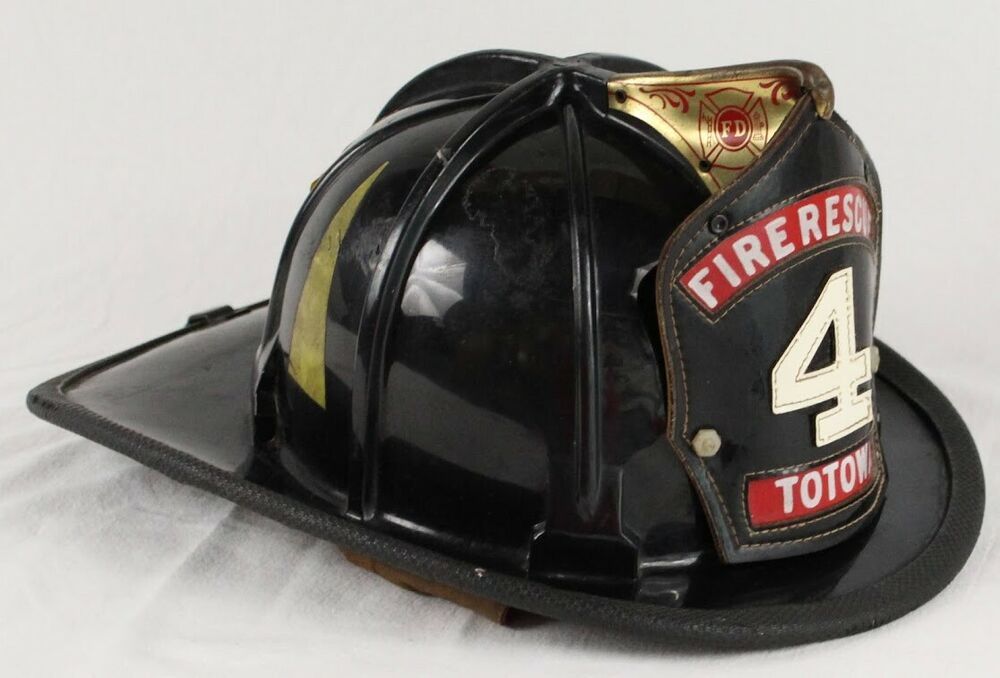
When I wear a helmet for rescue operations, be it human or animal, on dry land, on rope at elevation, wherever, I want it to do several things. First is it meets current NFPA 1971 and/or 1951 as well as OSHA and ANSI requirements where applicable. I want the confidence the helmet will help protect my head from hazards I may encounter working an emergency incident. Some of those considerations are electrical conductivity, heat exposure, impact and penetration protection.
The helmet should also offer protection from the sun, rain and debris. Two things we have plenty of here in South Florida is sun and rain. A vented helmet would be limiting for my needs. The vented helmet won’t meet standards for electrical protection, will expose my head to sun, rain and debris such as rocks, sand, sparks and metal shavings to name a few. I’ve seen a trend in the fire/rescue/EMS fields to use vented helmets with no brim.

Seeing those helmets brings back a memory from 1980 of me wearing my Hobie brand skateboard helmet for rope rescue practice where rock and debris from above kept falling onto my head from the vented shell. If that wasn’t misery enough it started raining. Sandy grit, small pebbles and rain through the helmet running down my face, neck and coveralls. “Why didn’t I wear my firefighting helmet like I usually do?” I asked myself. Next came, “Never again.” It makes me wonder how those who are wearing those modern “technical rescue” helmets are faring during the heavy rain storms we have here in Florida. My highly vented Cascade rescue helmet is great for water operations but not much else except occasionally it does come in handy when I can’t wear my First Due in a confined space.
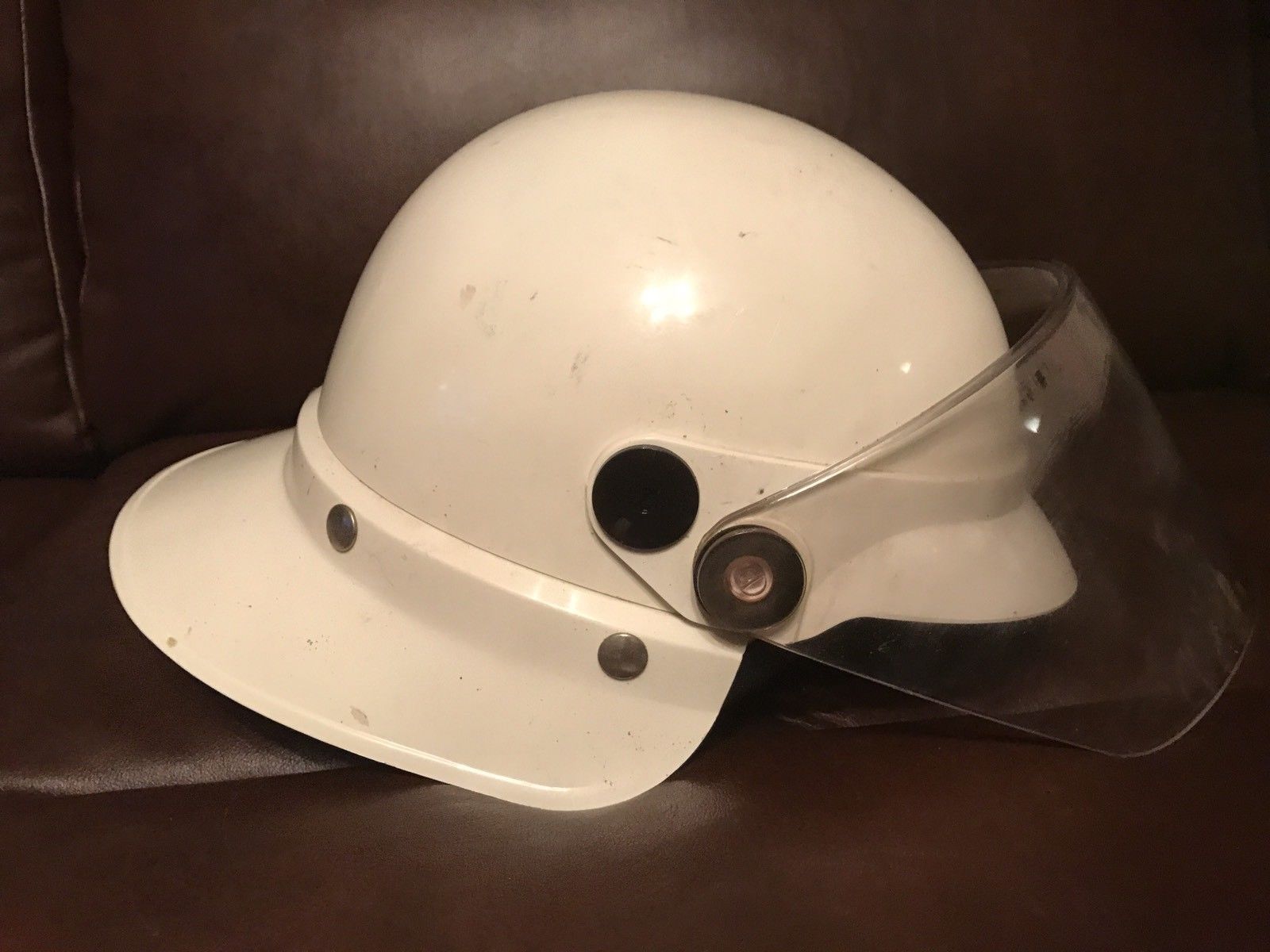
The non-vented solid shell addressed. That leads me to my next requirement for a helmet, the brim. My preferred helmet would be compact in overall size with a full brim. The solid shell along with a full brim helps keep rain and debris off my head and out of my face, neck and clothing. Something not possible with those no brim helmets. Yes, I know some of the no brim helmets have after market shade additions but that wont stop the rain.
Suspension System
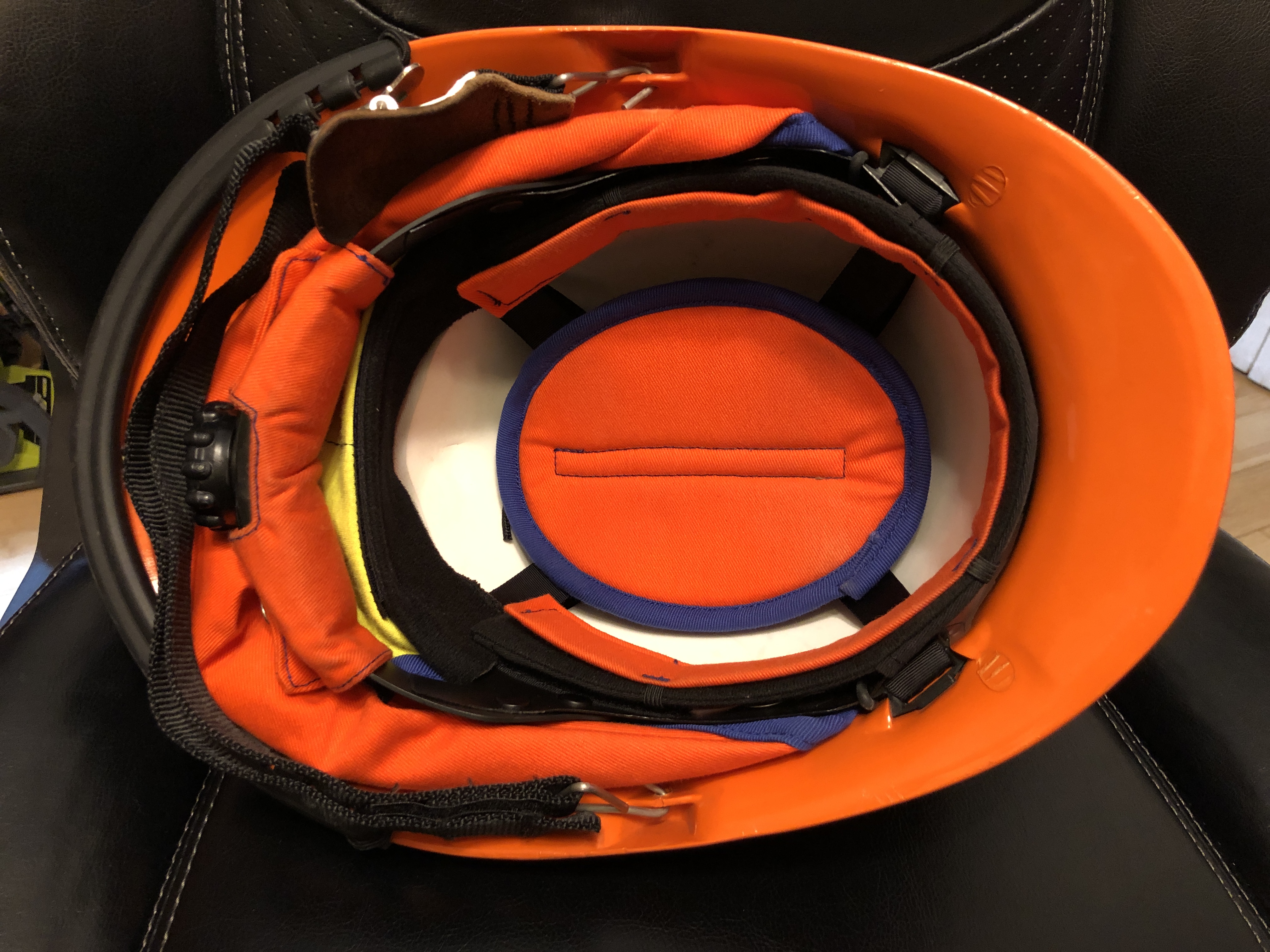
The suspension system is just as important as features mentioned in previous paragraphs. If the suspension system is not adjustable wearing the helmet can become uncomfortable quickly. After wearing many different helmets my preference is a suspension with a ratchet feature. Helmets with the older two part overlapping nape strap are hard to adjust quickly in the field and risk the plastic prongs that hold it in place getting broken. I like to call the nape strap helmets “headache helmets”.
The non-ratcheting suspension can typically be adjusted for your head once with confidence. If someone wanted to wear the helmet over a bandana or other head covering and adjust it to fit over a larger surface there is a high risk the plastic prongs that hold the over lapping straps together will break. I’ve had this happen to me and witnessed it multiple times on job sites. I also found that my head would ache more because I had the nape strap adjusted so that the helmet wouldn’t move around my head.
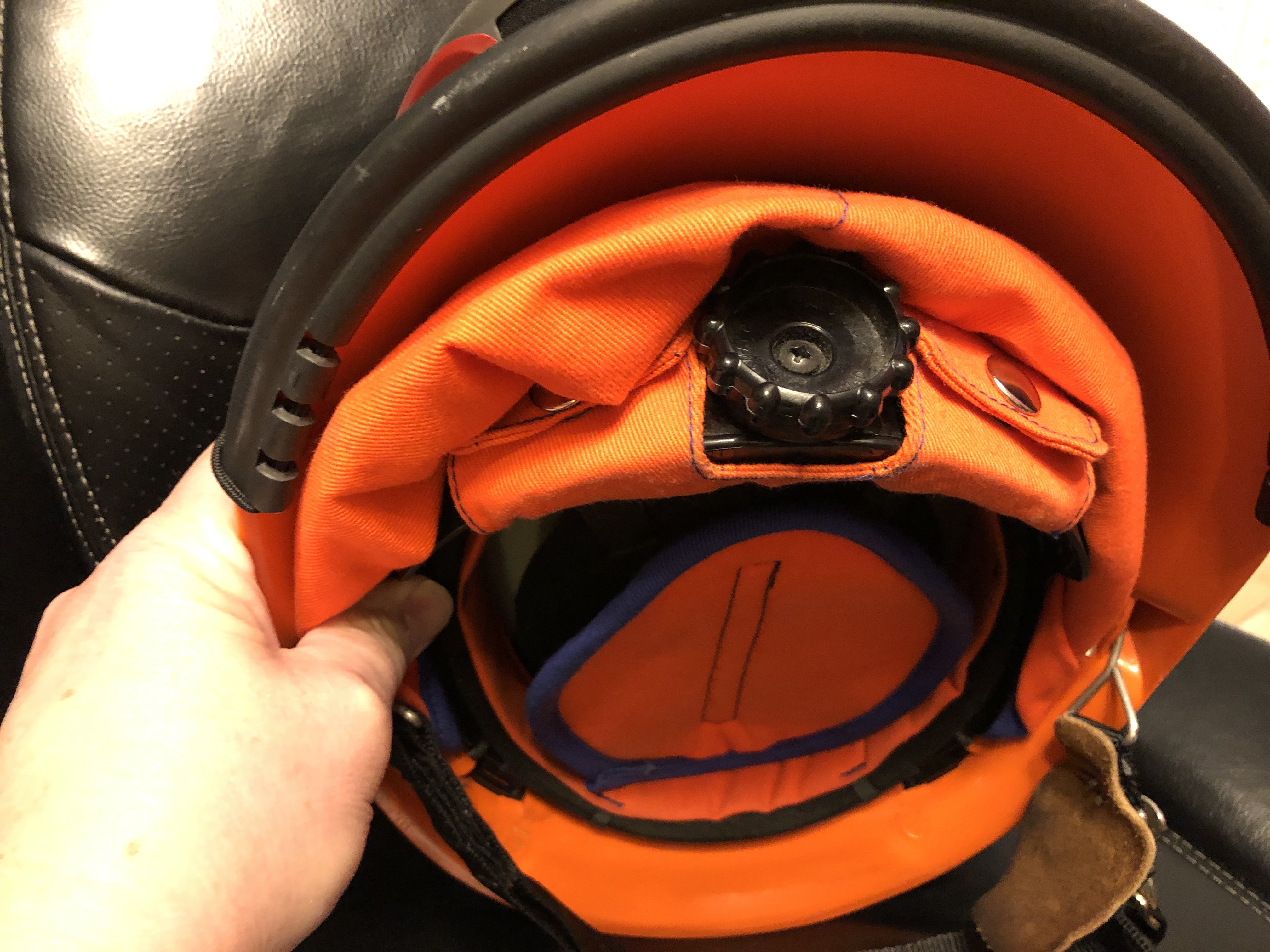
After my first experience with a ratchet in place of the nape strap I was convinced. I was able to quickly adjust the suspension tension with a simple turn of the knob. I could wear a bandana or air pack mask without any problems. Typically I’ll adjust the tension of the suspension snugly so the helmet doesn’t move around on my head as I am working. If it’s too tight and starts to become annoying all is have to do is turn the knob. It also reduces the tension I need on my chinstrap so that the chinstrap doesn’t have to compensate for a loose helmet.
The First Due helmet has several adjustment points to ensure the helmet sits properly on your head. Sometimes it needs to be worn several times with a few adjustments to get it to that fits just right sweet spot. It really does make a big difference. If you’re going to purchase a helmet make sure you get one with the ratcheting feature no matter which one you choose you won’t regret it.
Uses
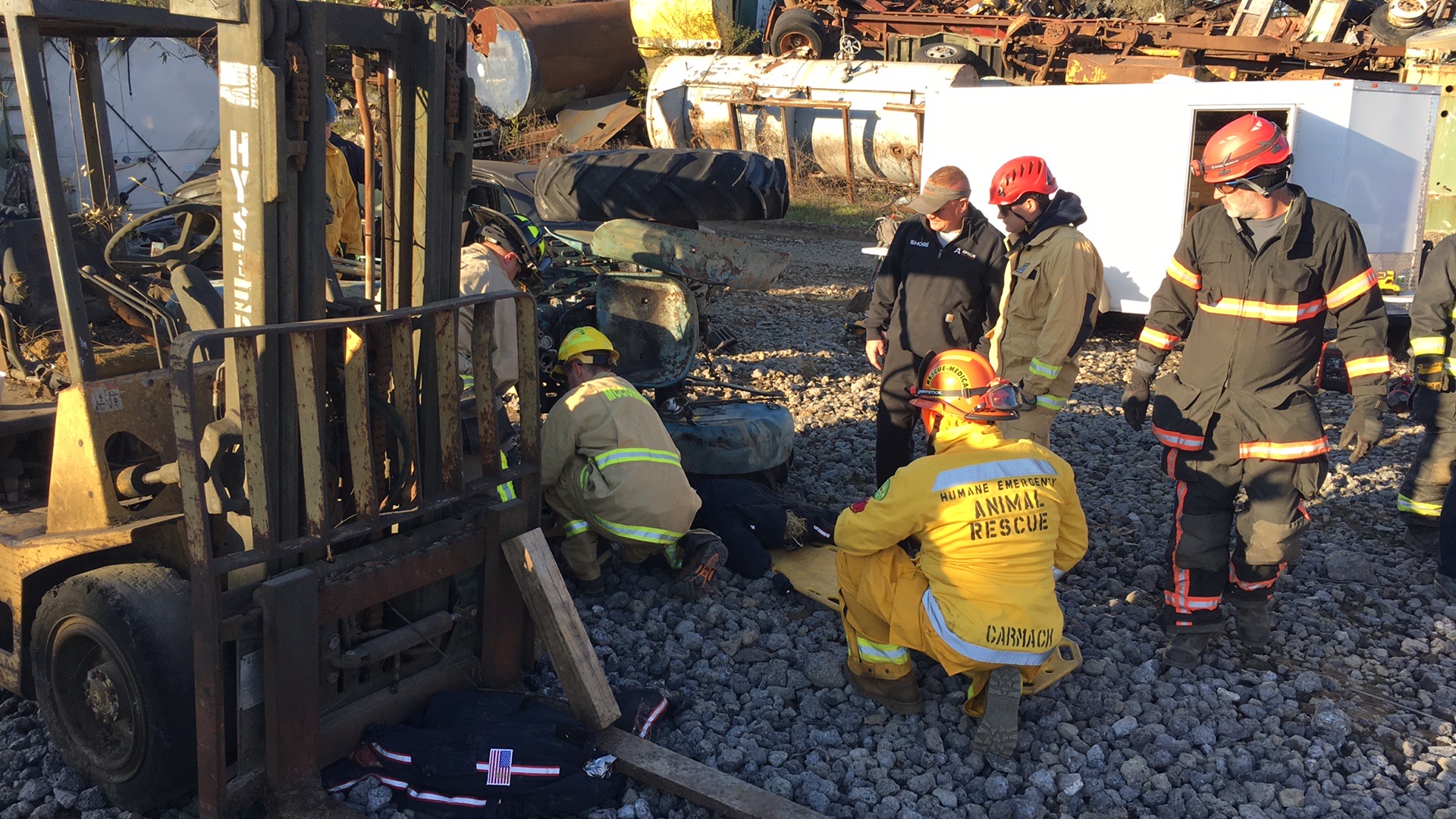
I talked about the features and why I prefer the First Due but haven’t mentioned why I think it is so versatile and useful for most animal rescue operations. I’ve used the First Due in confined spaces such as attic and under house crawl spaces, in city street storm drainage systems, coal mines and caves. On-rope operations, cliffside, in trees, towers, or on the side of buildings and ladders. EMS and fire department operations. About the only rescue scenario I won’t use the First Due helmet is water based operations.
Other considerations
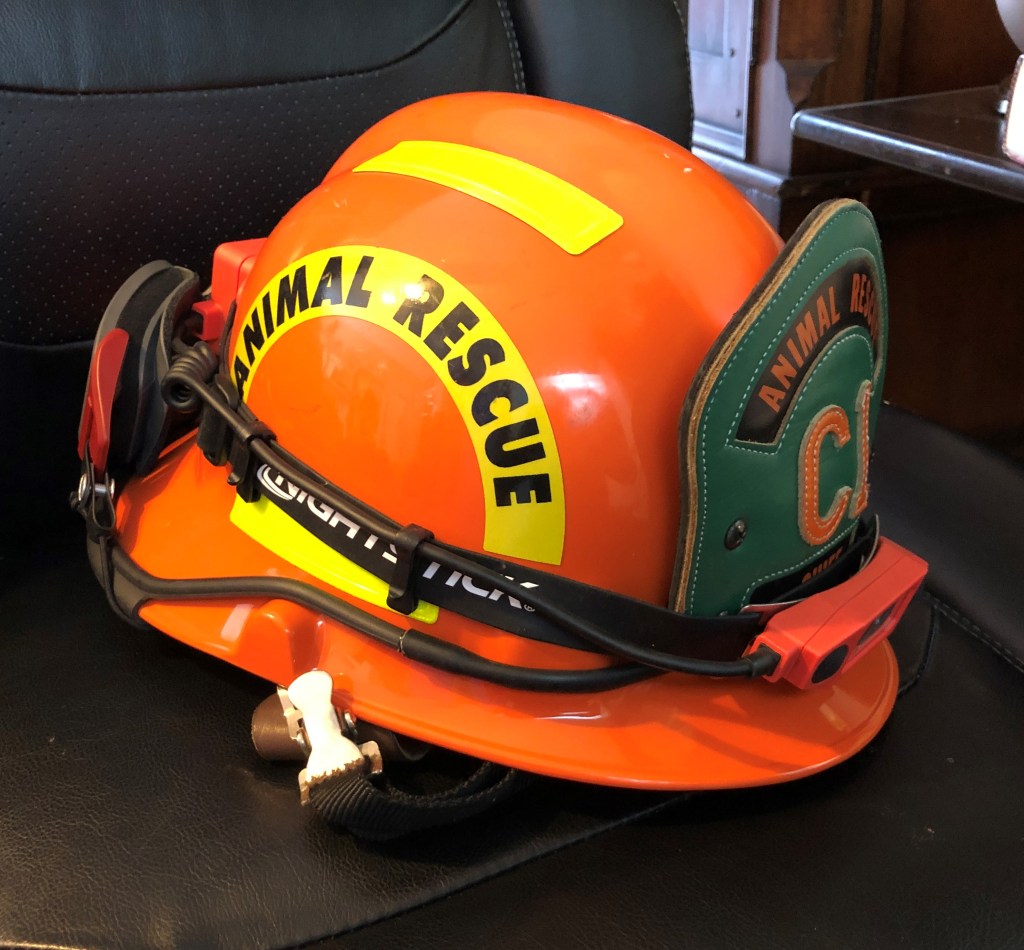
Other considerations when choosing the First Due were color choice availability. The First Due is available in six colors, black, blue, orange, red, white and yellow. Our organization choose orange because it is a distinctive color, is easily visible and it is different than any other color used by local fire departments. Because of my fire department experience I believe it is important to have an identifying shield on the front along with conspicuity tape and markings on the helmet.
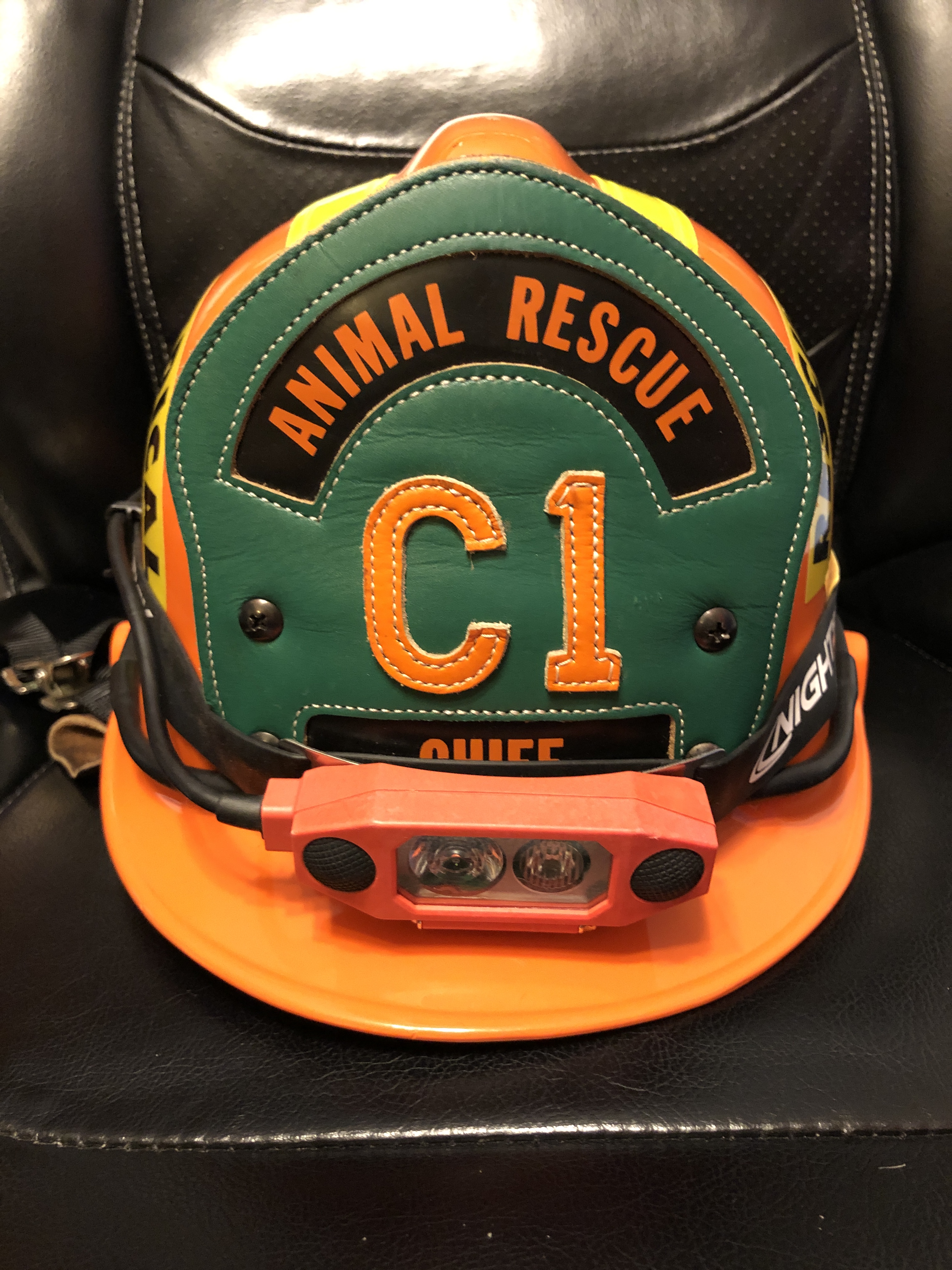
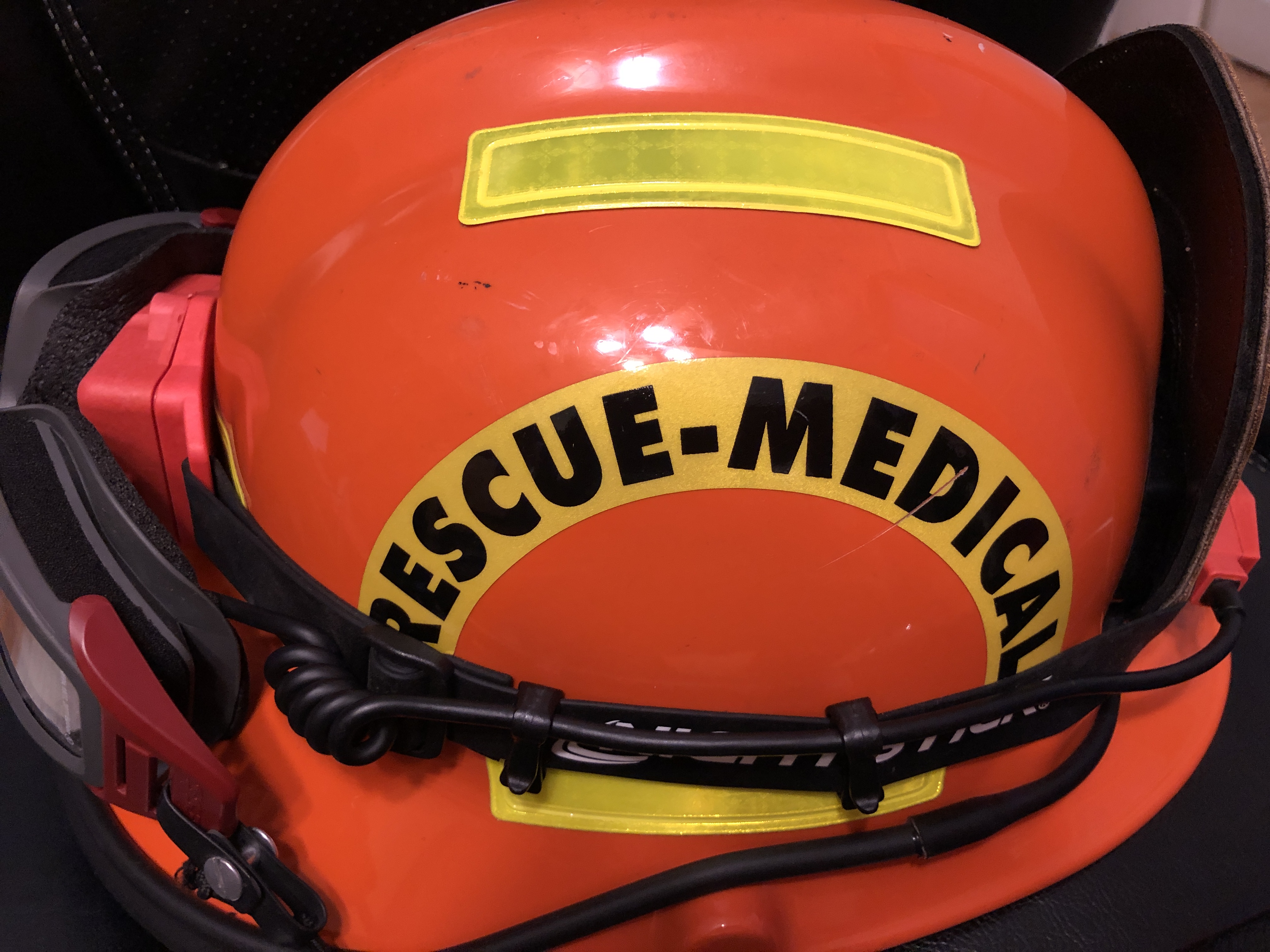
The shield makes it easy for others to identify an organization and rank when face-to-face meetings occur. It can also make it easier to pick someone out of group of first responders at a distance. Equally important is light reflective markings that can help differentiate animal rescue personnel from fire department personnel. Custom made “Animal Rescue” arch rockers on the sides as a example. At night, in dark places such as storm drains or reduced visibility situations the reflective tape and markings make it easier to keep track of personnel. It’s really important, you don’t want your helmet to be without it.
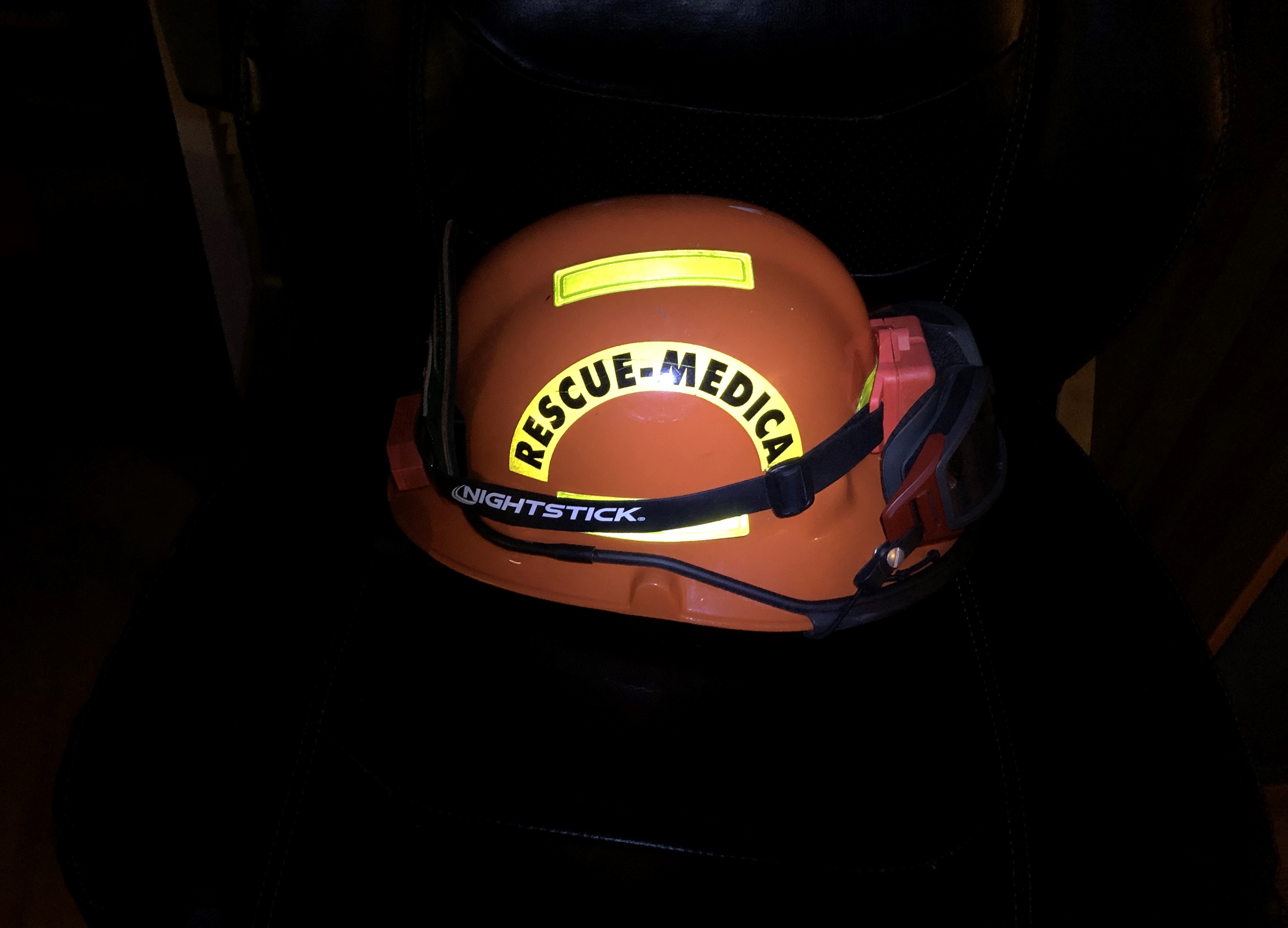
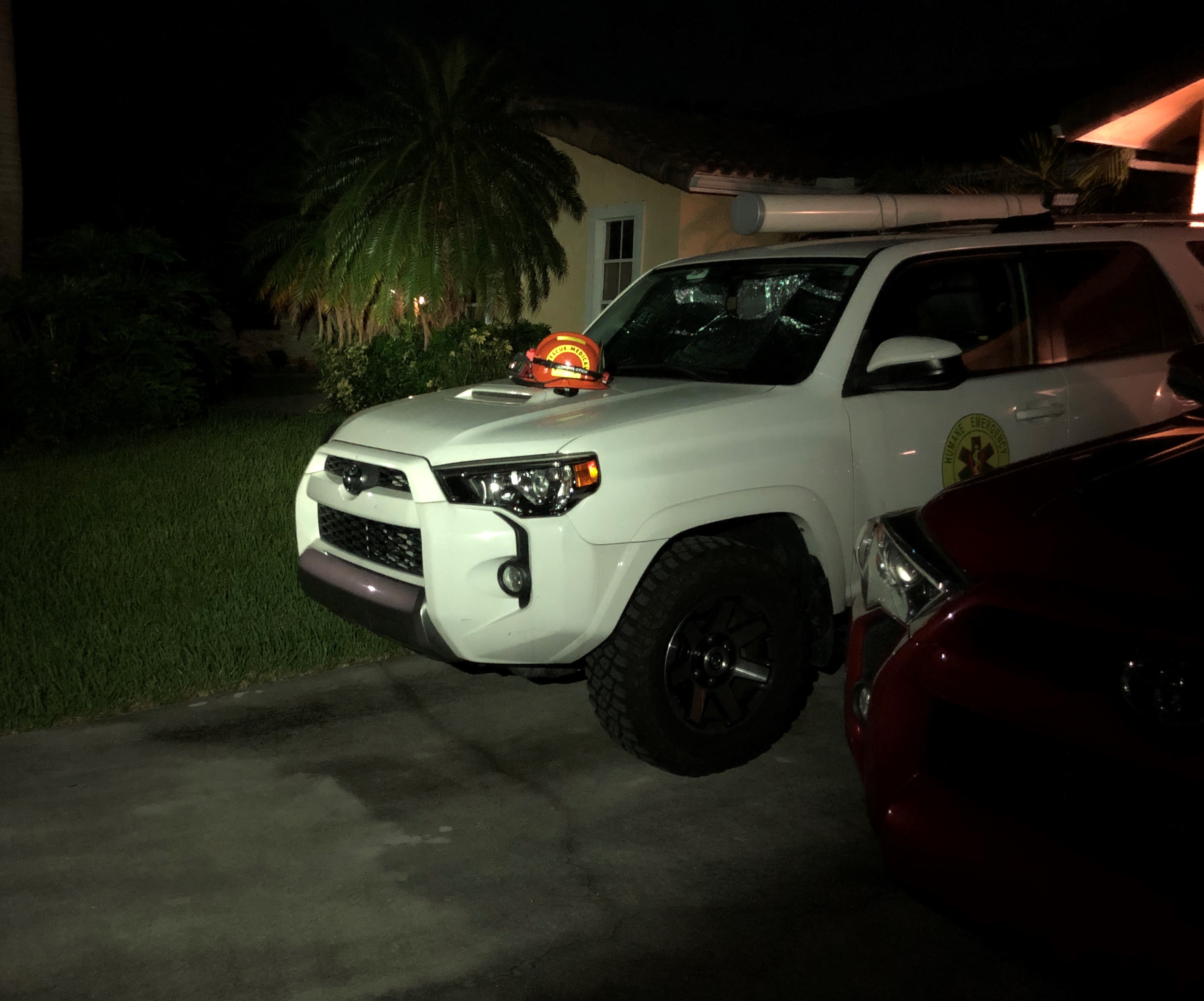
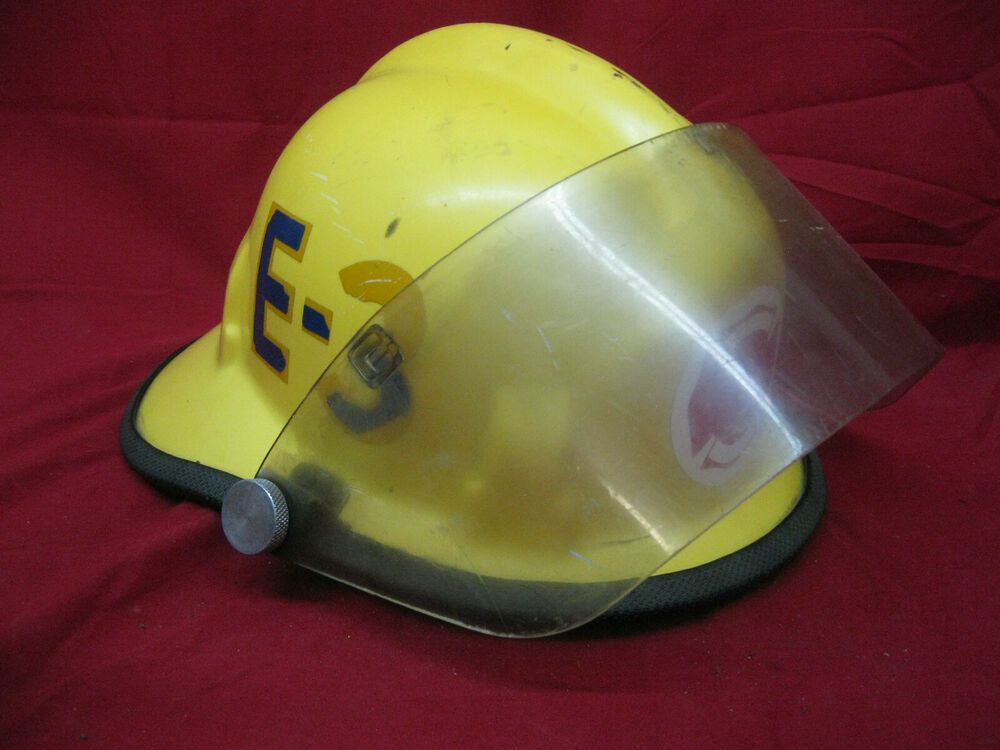
The helmet should also be able to hold goggles and a head light. I cannot stress enough how important eye protection is. While I may use safety glasses when handling animals I always keep goggles mounted on my helmet. Unlike the glasses, goggles protect my eyes by sealing them within the google. This is really important when in smoky environments, high winds, around helicopters or flying debris such as grinder sparks or metal shavings. The First Due has factory options for a face shield or goggle mounts. Its also a good thing to be able to have a helmet mounted light source to enable the wearer to operate or carry equipment without a hand light.
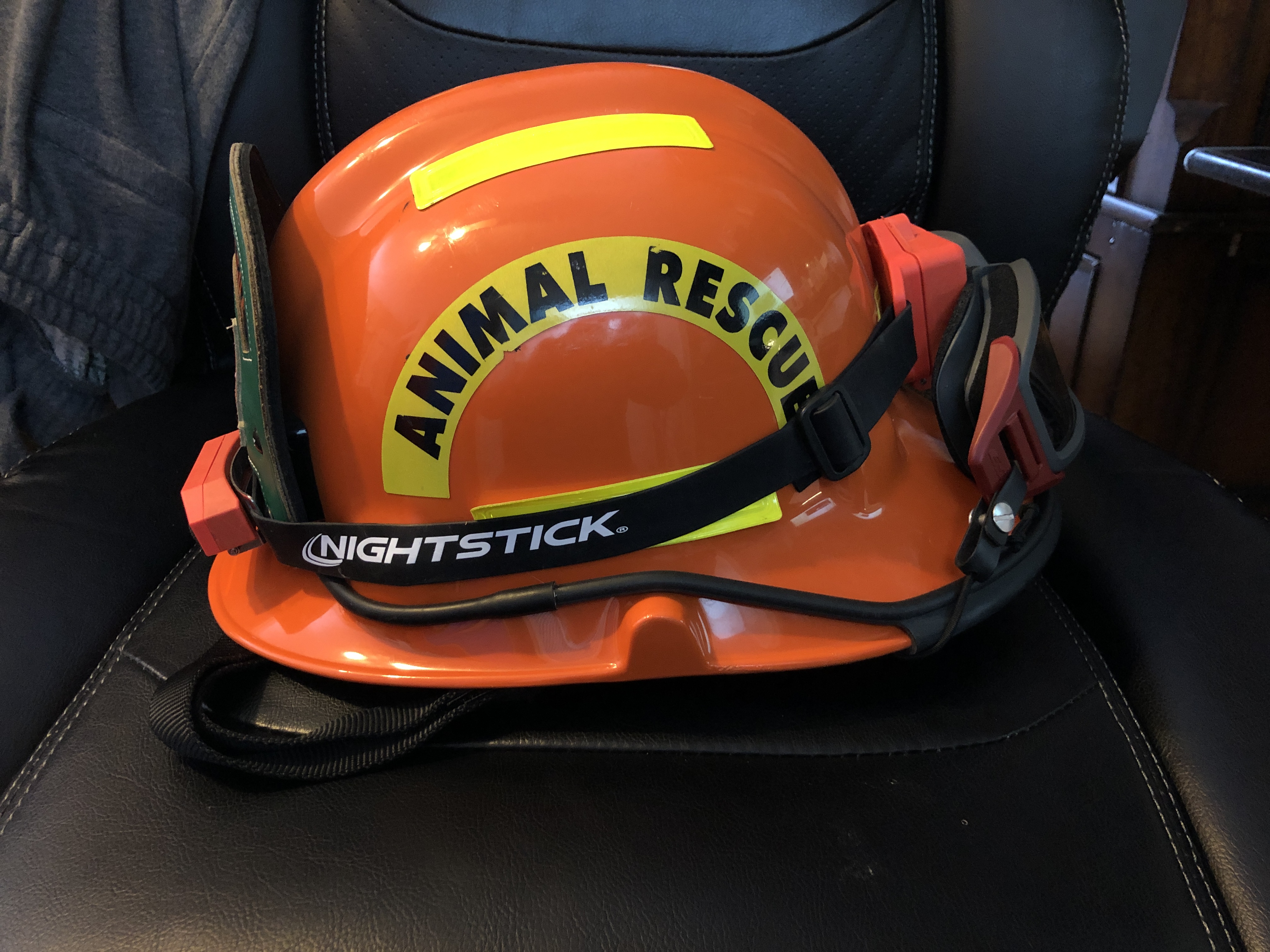
Price? I won’t mention exact price here because it will always change and vary between sellers. When looking at price ask yourself, “What is my head, my comfort, my safety worth?” Do you want the cheaper $??.00 helmet that’s not rated for rescue work or the $???.00 helmet that is? You can see the choice I’ve made from the photos of the helmet used for this blog.
One should also consider what their state or federal regulations or law require for their particular needs. Before you buy or your organization starts to outfit your team with helmets do some research. Animal rescue work is no different than human rescue work. Well, it might be a little more dangerous depending on the species we’re working with. It has the same technical requirements for skills and equipment as human rescue. Please don’t compromise when it comes to personal protective equipment.
If you have questions or comments please post them below or on the YouTube video. Also check out the companion video to this blog post below.
Big Boss- Rescue Chief/Founder
P.S. Please help support our efforts. Subscribe to our YouTube channel. It’s free! Watch, like and share our videos on your social media page. It really makes a difference. You can visit our donations page to find out other ways to support our mission.
 Humane Emergency Animal Rescue
One response to “Product Review- Phenix Technology’s First Due- Structural Fire Helmet”
[…] needs. My helmet of choice for almost all animal rescue incidents can be found at this blog post Product Review- Phenix Technology’s First Due- Structural Fire Helmet.If you have questions or comments please post them below or on the YouTube video. Also check out […]
LikeLike