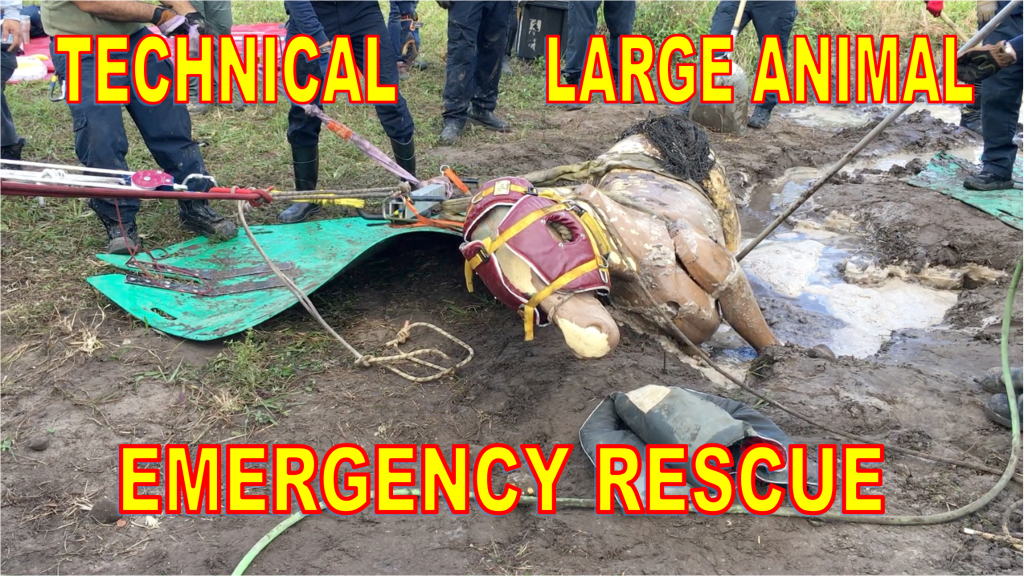
Essential training for any organization or department that responds to technical large animal emergencies.
Just in from the better late than never department. This blog along with the video that was made at the time was put on the wrong to-do list and I’ve just discovered my mistake. It was scheduled to be one of the first post made when our website went online. Enough of that here we go.
The 8th and 9th of December 2022 Broward Sheriff Fire Rescue hosted a Technical Large Animal Emergency Rescue(TLAER) operations level training for first responders. There are three levels, awareness, operations, and technician. For those not familiar with this training it teaches various levels of the technical aspects of emergency rescue of large animals. Large animals are but not limited to horses, cattle and exotic species.
Learn by doing
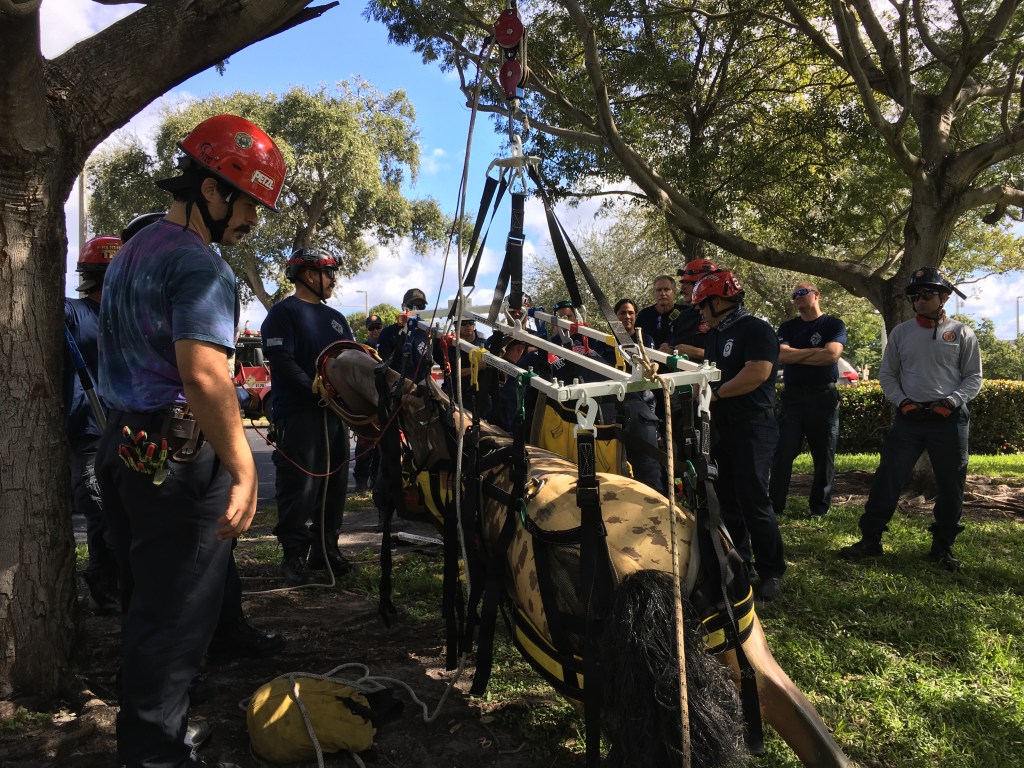
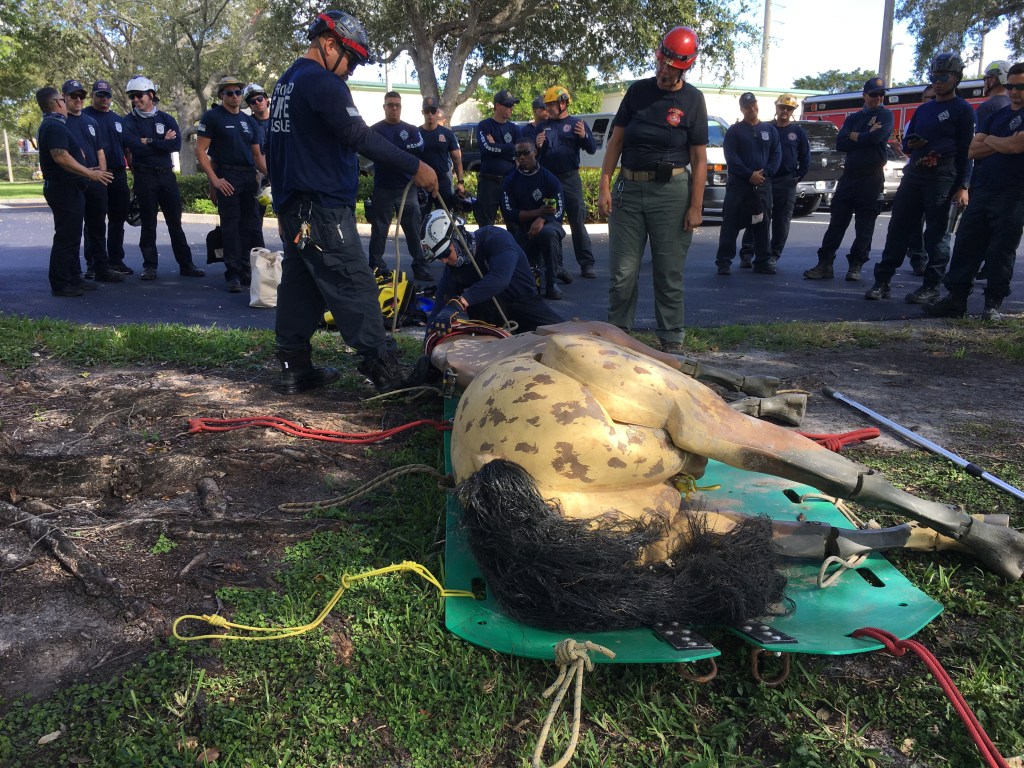
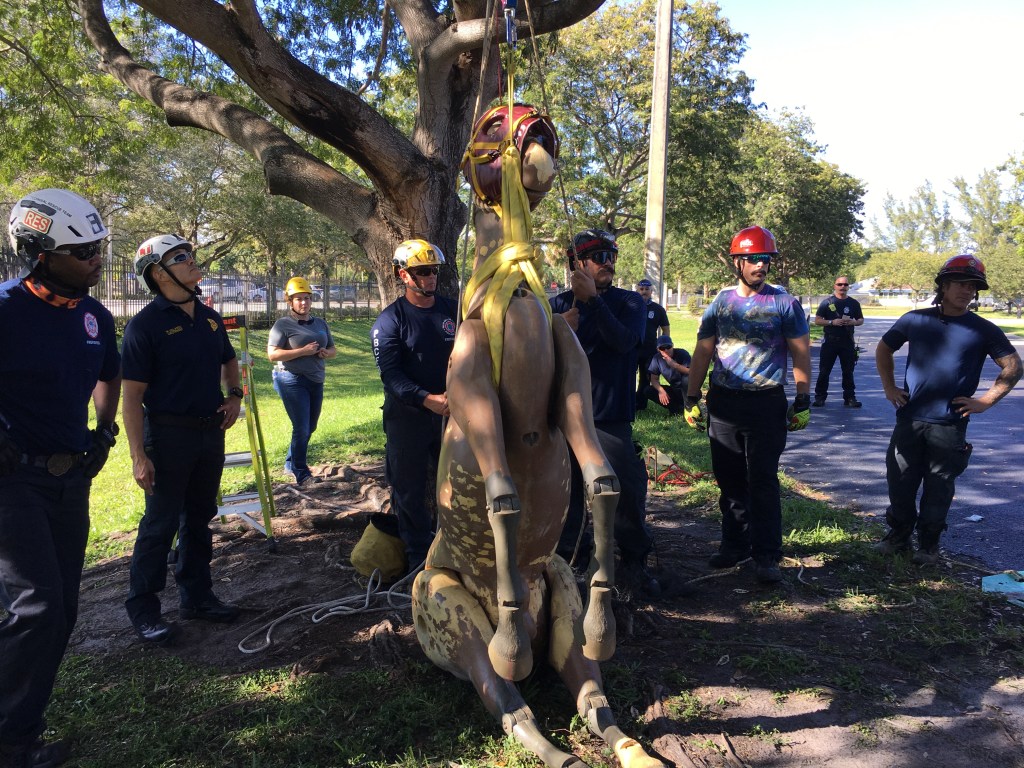
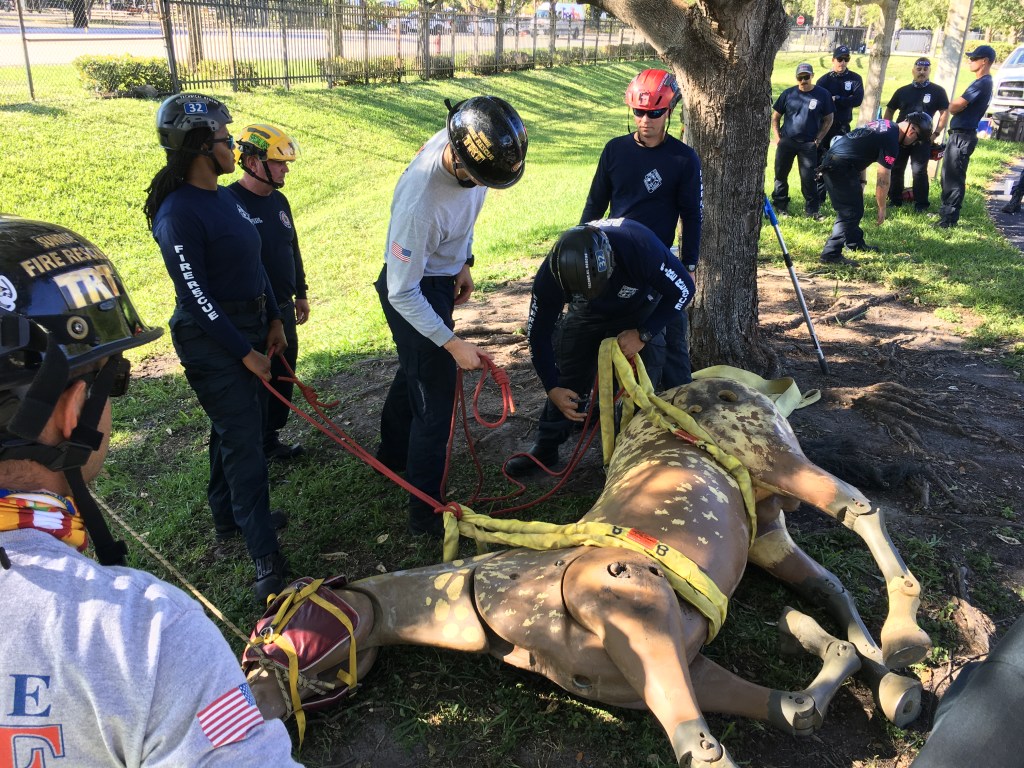
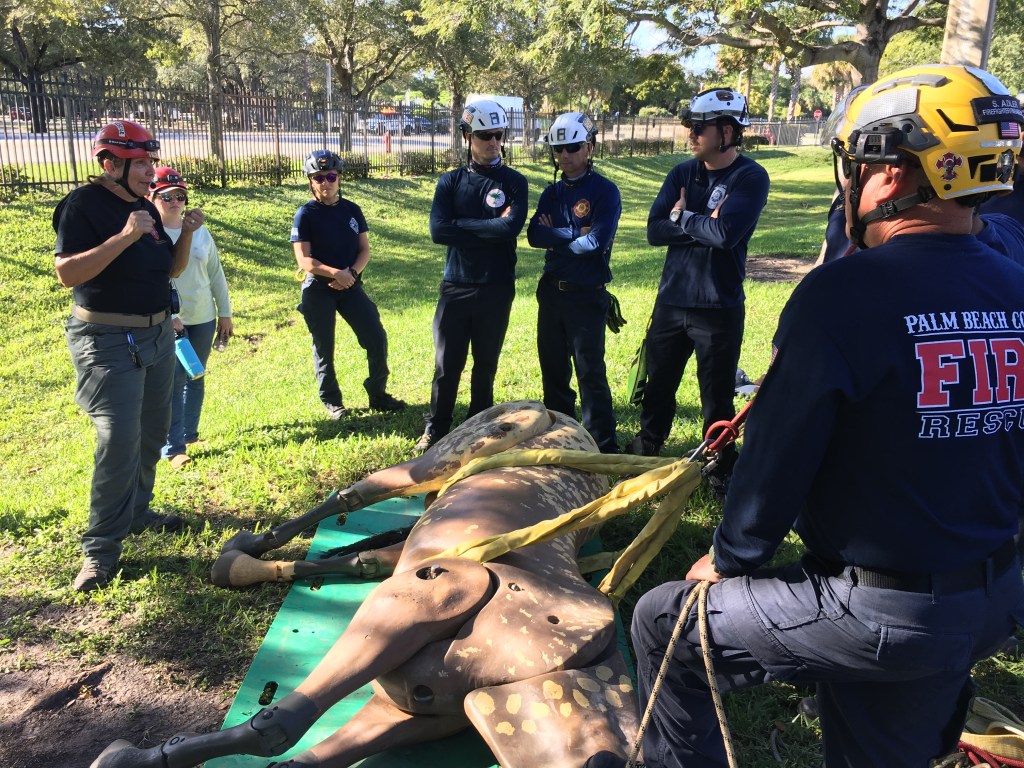
The first day consists of some classroom time spent going over basics such as species, animal behavior, transport trailers, techniques, tabletop exercises and equipment. The rest of the day attendees practiced using the transport glide, a device used to move large animals, provide edge protection, provide minimal friction during movement among its many uses. The Swiss seat, forward and rear assist slings were utilized to move a horse manikin around the training location. The Hast-Becker Sling that utilizes several components including a spreader bar to secure a large animal that can be used with any method of lifting. An Anderson Sling originally designed for in-hospital use later found to be acceptable for helicopter transport was applied to the manikin then lifted using a mechanical advantage rope system.
Day Two
On the second day attendees were challenged with several of the typical scenarios that may be encountered on large animal rescue incidents. There was a mud pit, a hole that could also be representative of a cistern or old shallow well etc., and three trench extrications. The mud pit contained the manikin with its limbs trapped in the mud. A flat strap guide and Nicopolous Needle were used to guide straps under the manikin to assist with lifting. The Nicopolous Needle is equipped with air and water hose attachments that assist the needle to pass through the mud more efficiently. If air or water is not used it will take much more brute force effort to get through the mud to pass the slings through.
A mud pit extrication is more complex. It also requires the use of mechanical advantage rope systems and at least one mud lance. The mud lance is a device that uses air or water to break the suction created by the mud on the animals limbs. Releasing the suction on the limbs is essential to successfully extricate the animal with minimal or no harm. Not using them and the equipment properly may injure or kill the animal being extricated.
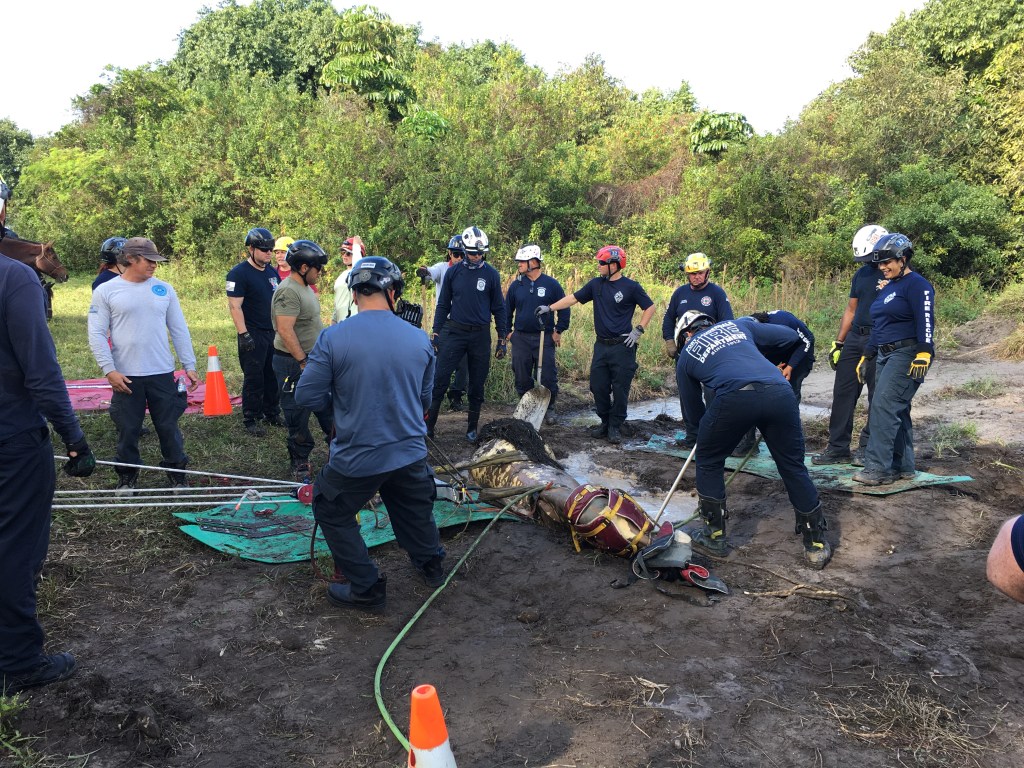
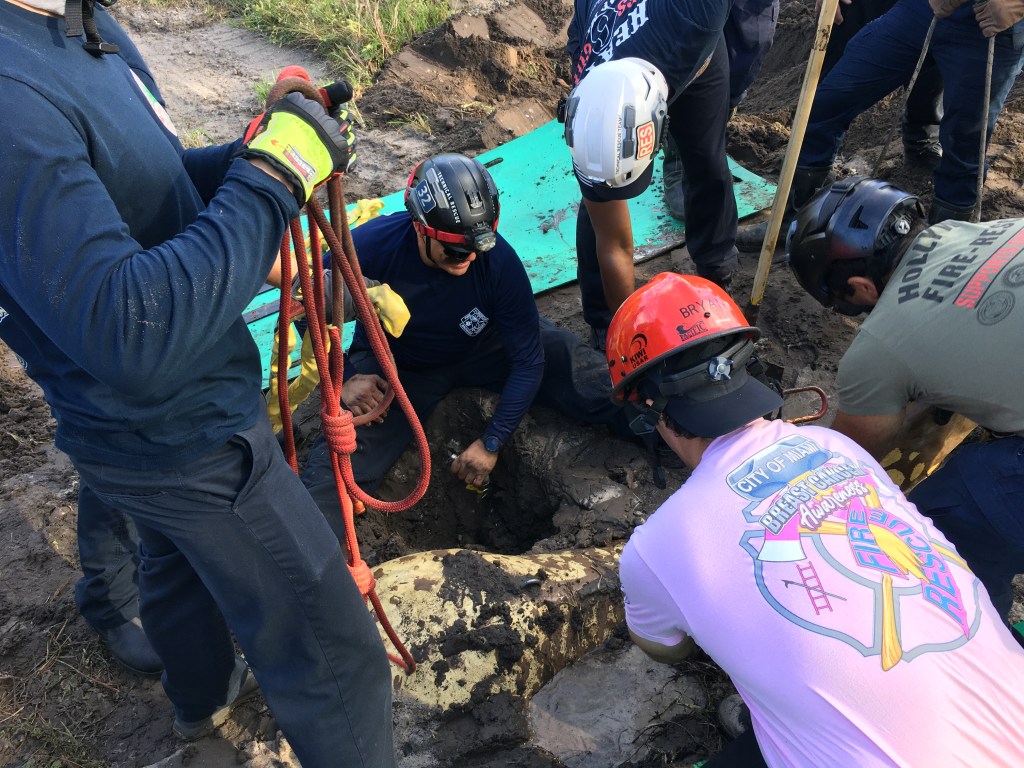
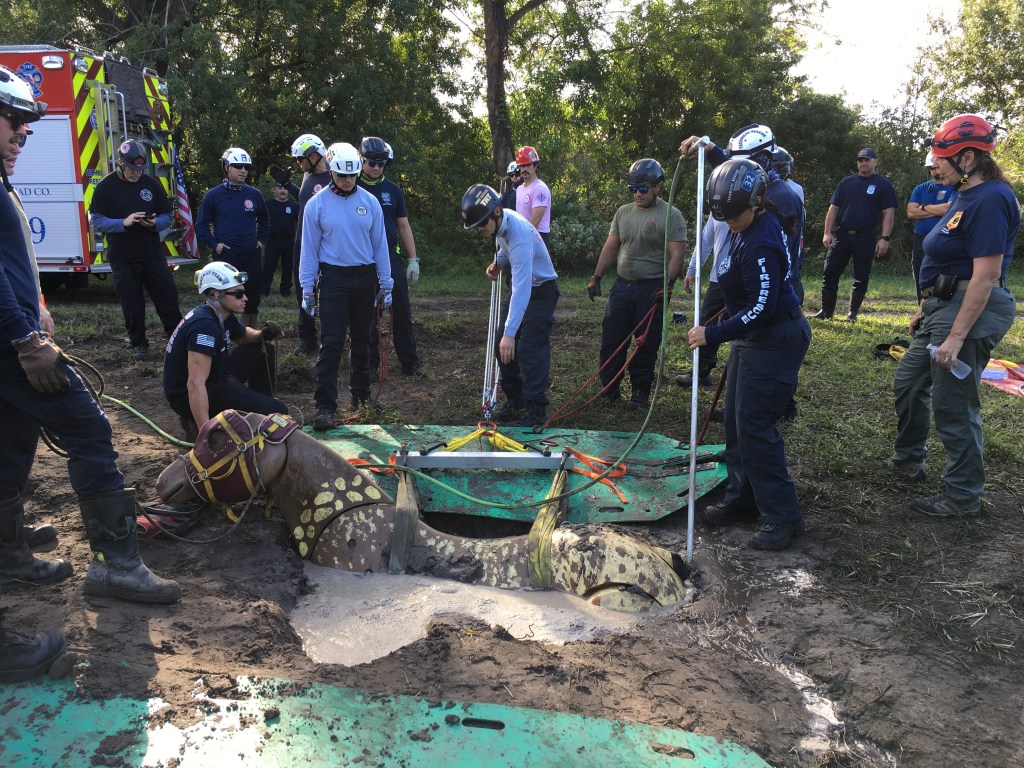
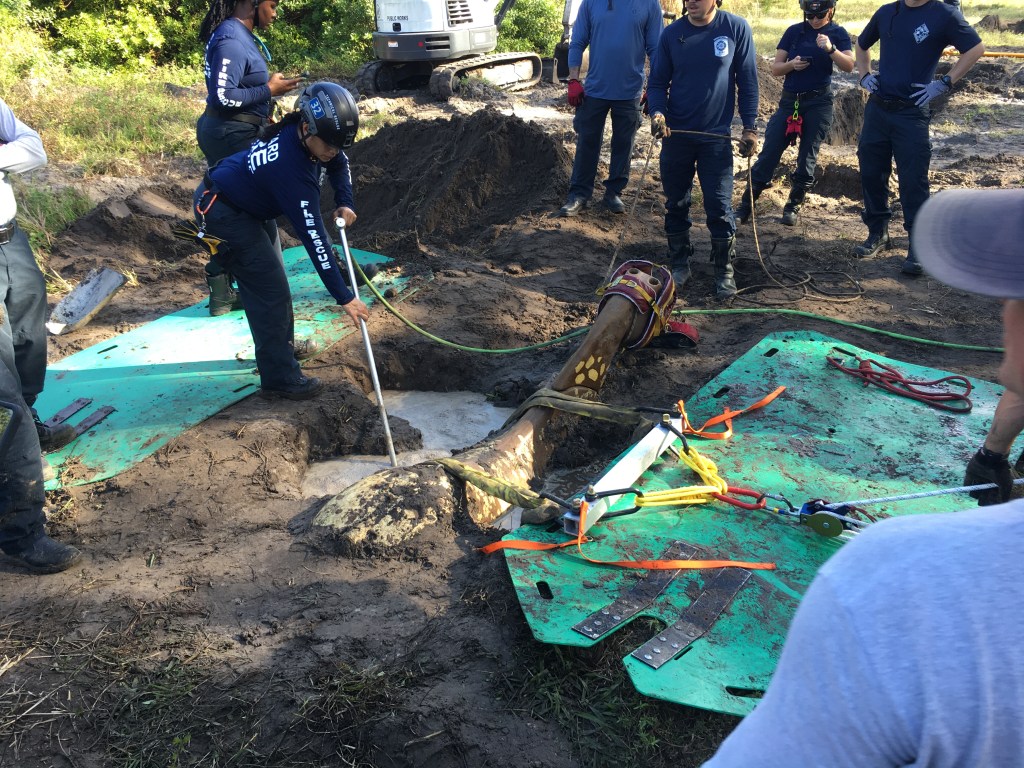
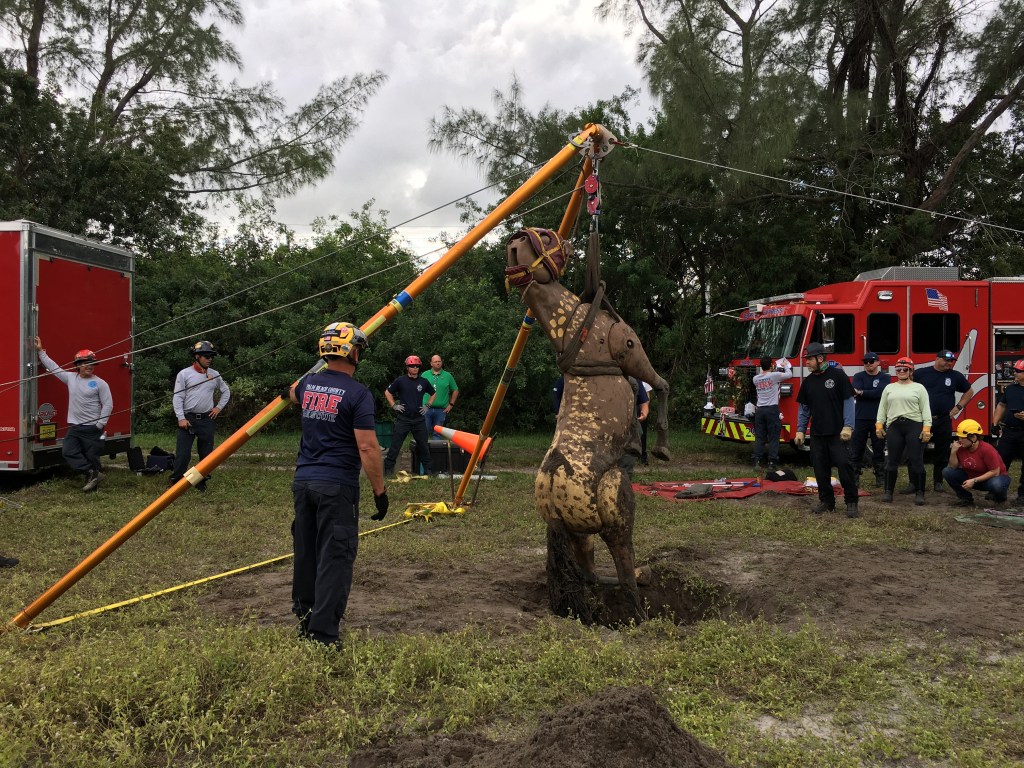
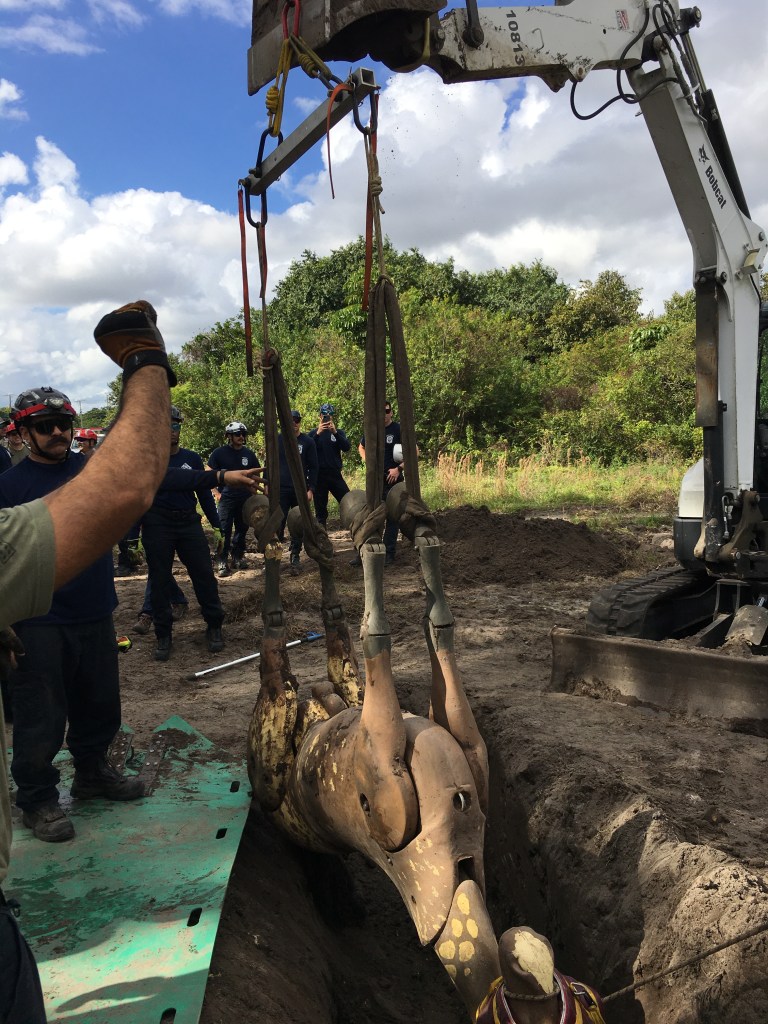
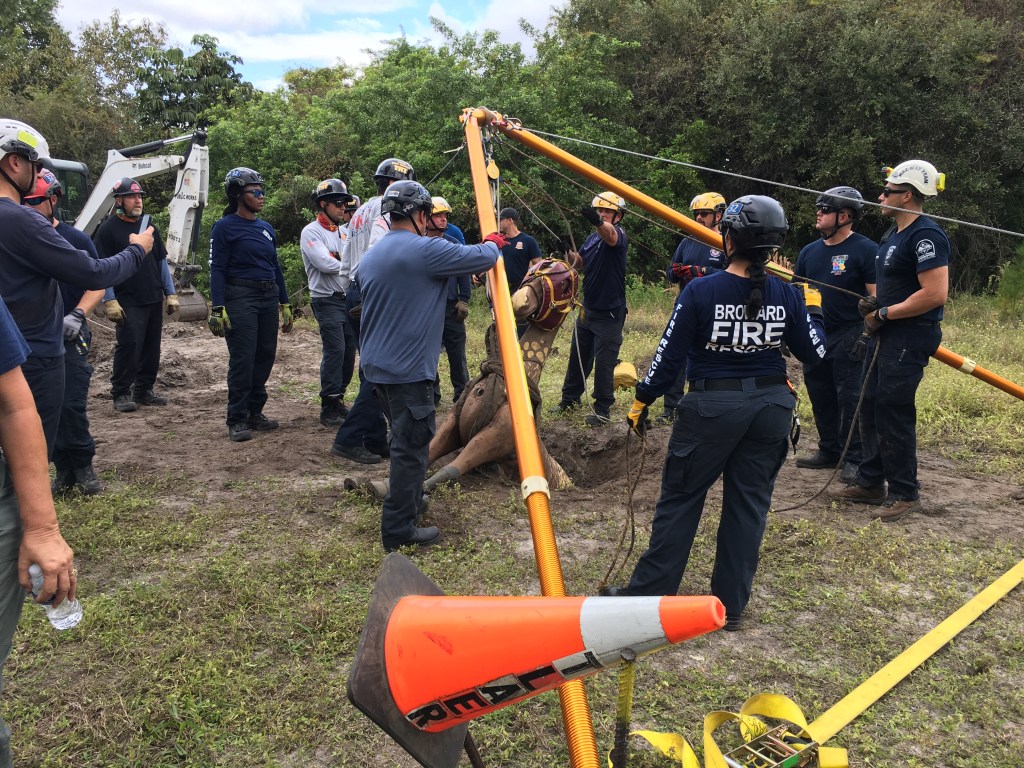
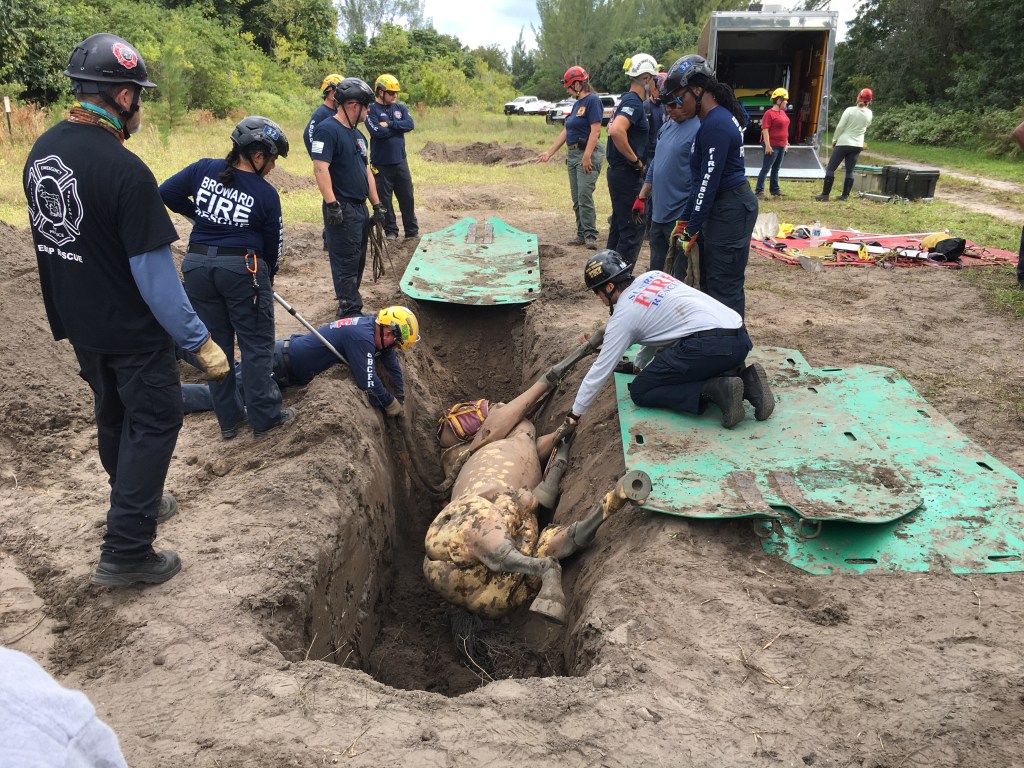
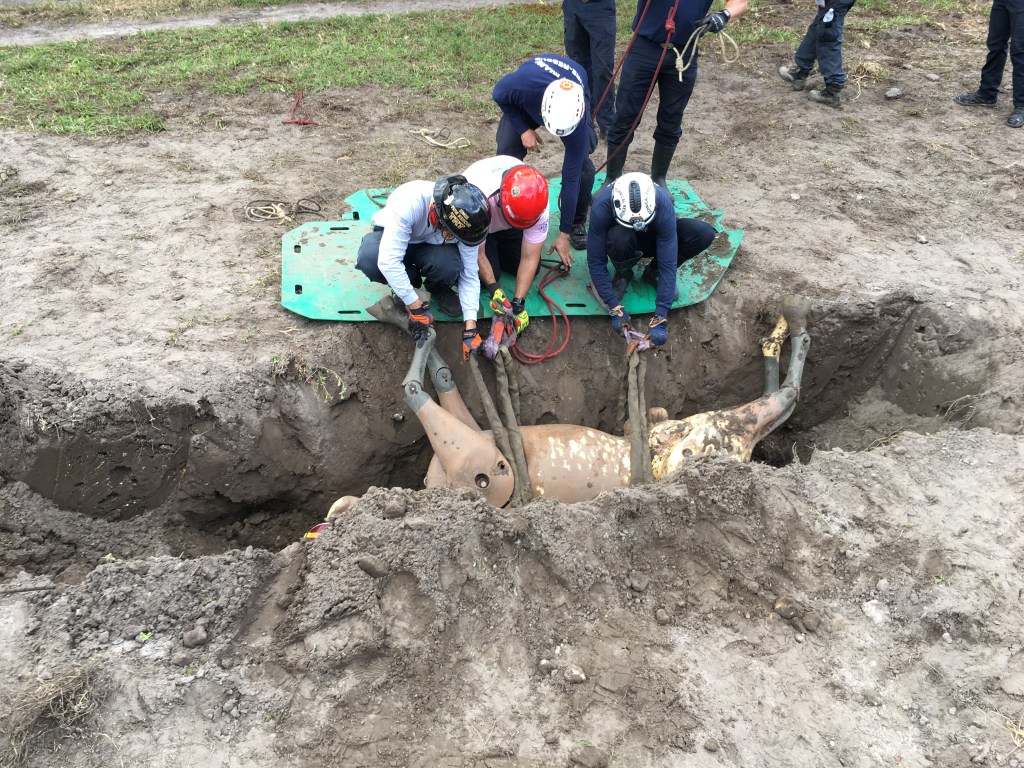
The hole extrication demonstrated the use and necessity of a bipod system as used for large animal extrication. The three trench extrications consisted of, a horse on it’s back requiring rapid removal where girth hitches were applied to the limbs that was lifted out by an excavator,. An upright horse with the transport glide used as an edge protector progressing into transport using two slings using human power to lift from the side. And last a horse on its back using a forward assist sling to place the horse onto a transport glide on a ramp dug out of the end of the trench.
I’ve kept this blog short because it would take pages to explain everything in detail. The purpose of this blog is paint an overview and generate interest for those unfamiliar with TLAER or those who plan on attending a course. Note, knowledge of the Incident Command System, Rope rescue techniques, scene safety/assessment and other first responder training is essential for conducting technical animal rescue operations. If you don’t have any of that kind of training get it before you attend and you’ll get much more from the class. Also I urge you check out the video below to see the things described above in action.

My attendance in this class would be my fourth since taking the class back in 2002. The course keeps getting better as techniques and equipment evolve. Rebecca Husted is a great instructor. I always enjoy her presence, humor and personality. Go to a class you won’t regret it and you’ll leave a little more intelligent.
To contact or for more information on attending a TLAER class click here
Big Boss- Rescue Chief/Founder
P.S. Please help support our efforts. Subscribe to our YouTube channel. It’s free! Watch, like and share our videos on your social media page. It really makes a difference. You can visit our donations page to find out other ways to support our mission.
 Humane Emergency Animal Rescue