Is this a good choice for animal rescue operations?
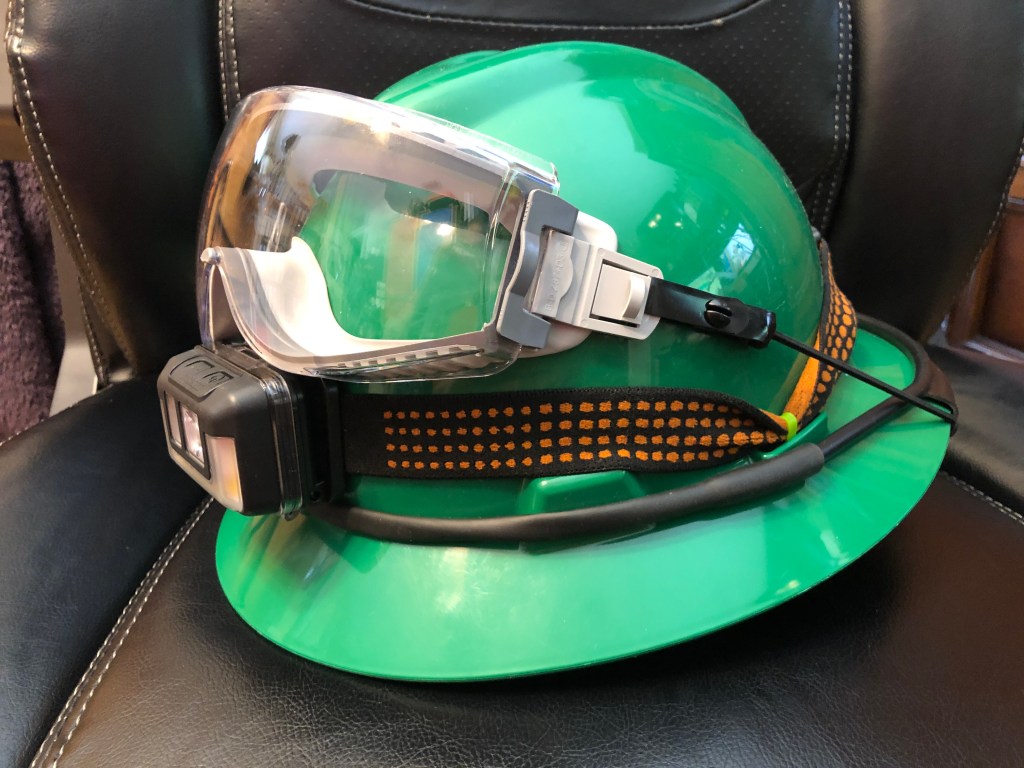
Continuing the Product Review Series on personal protective equipment (PPE) for animal rescue personnel this blog and video features the MSA V-GARD Full-Brim
My Hard Hat History
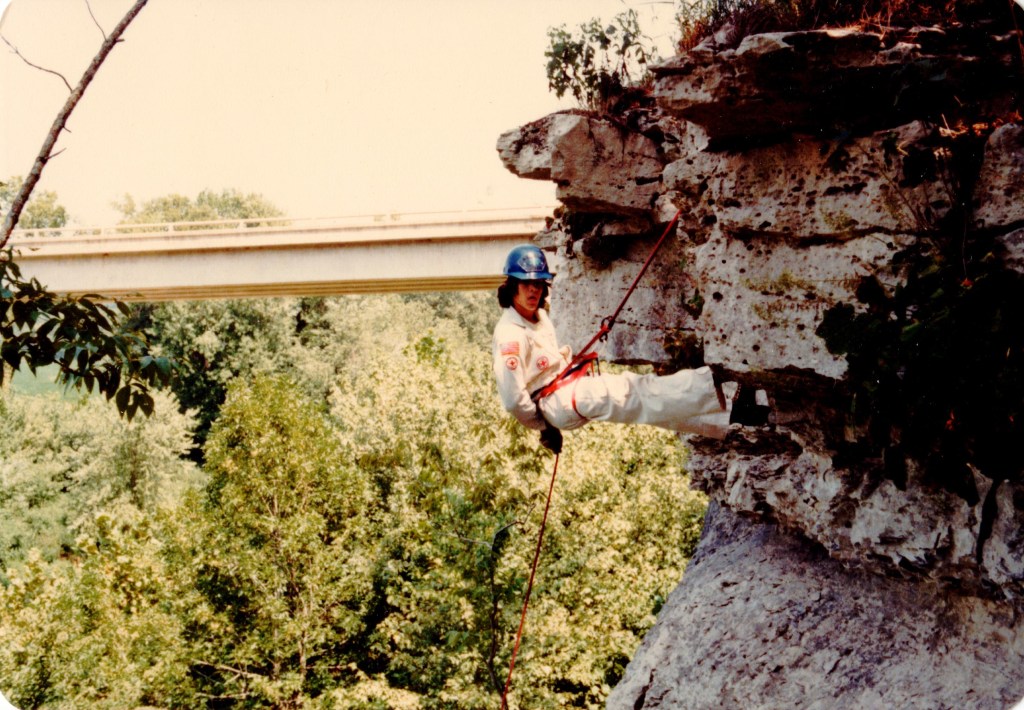
My hard hat helmet history began in 1978. When for the first time I used a standard hard hat with a front brim for exploring caves, rappelling and climbing around the cliff faces throughout Tennessee and Kentucky. Then in later years a full brim helmet on construction sites. In 1978 because of my lack of experience with other helmets and their benefits, I didn’t desire a better helmet until I wore a firefighting helmet in 1979. Wearing the firefighting helmet transformed my view of what kind of protection a helmet could provide.
Likes
This model MSA V-GARD Full-Brim high-density polyethylene with a UV inhibitor is rated as a Type I, ANSI/ISEA Z89.1-2014 (Class E) and CSA Z94.1-2014 (Class E). I won’t quote the Type I, ANSI/ISEA Z89.1-2014 standards here because I don’t want to pay them $40.00 to view it on their website. I can give a brief explanation of the standard. However if you need the exact standard to determine your own interpretation of it do not rely on my explanation to make a decision on what type helmet you should purchase.
Type I hard hats were designed to reduce impact force from a blow to the top of the head. That might be a falling hand tool or other light item that could impact the head and not kill the person wearing the helmet. Class E is a rating for electrical conductivity. Since this helmet is a Class E it is rated for dielectric protection up to 20,000 volts. It has a full brim and a ratchet suspension.
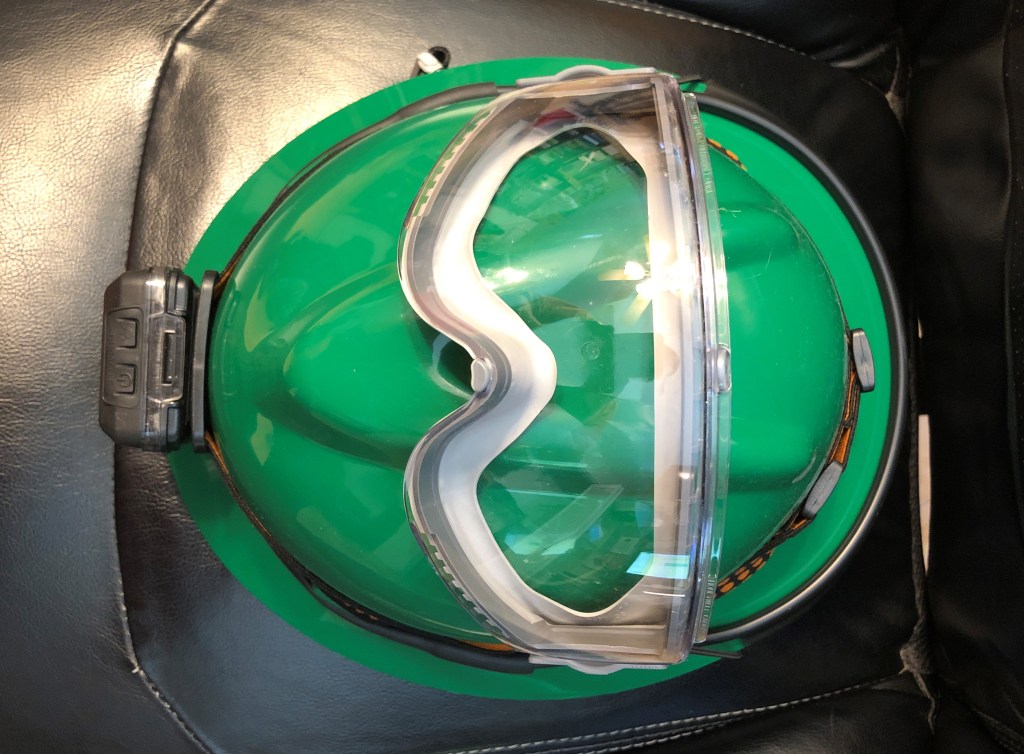
I prefer a non-vented full brim over other helmets because it offers better sun, debris and rain protection that many of the short or no-brim helmets I see others wearing for animal rescue cannot provide. For almost all helmet applications a ratchet suspension it essential. It is easily adjustable to reduce tension on the head that may cause discomfort or headache. It can also quickly accommodate other items worn on the head such as a bandana, Nomex hood or winter hat.
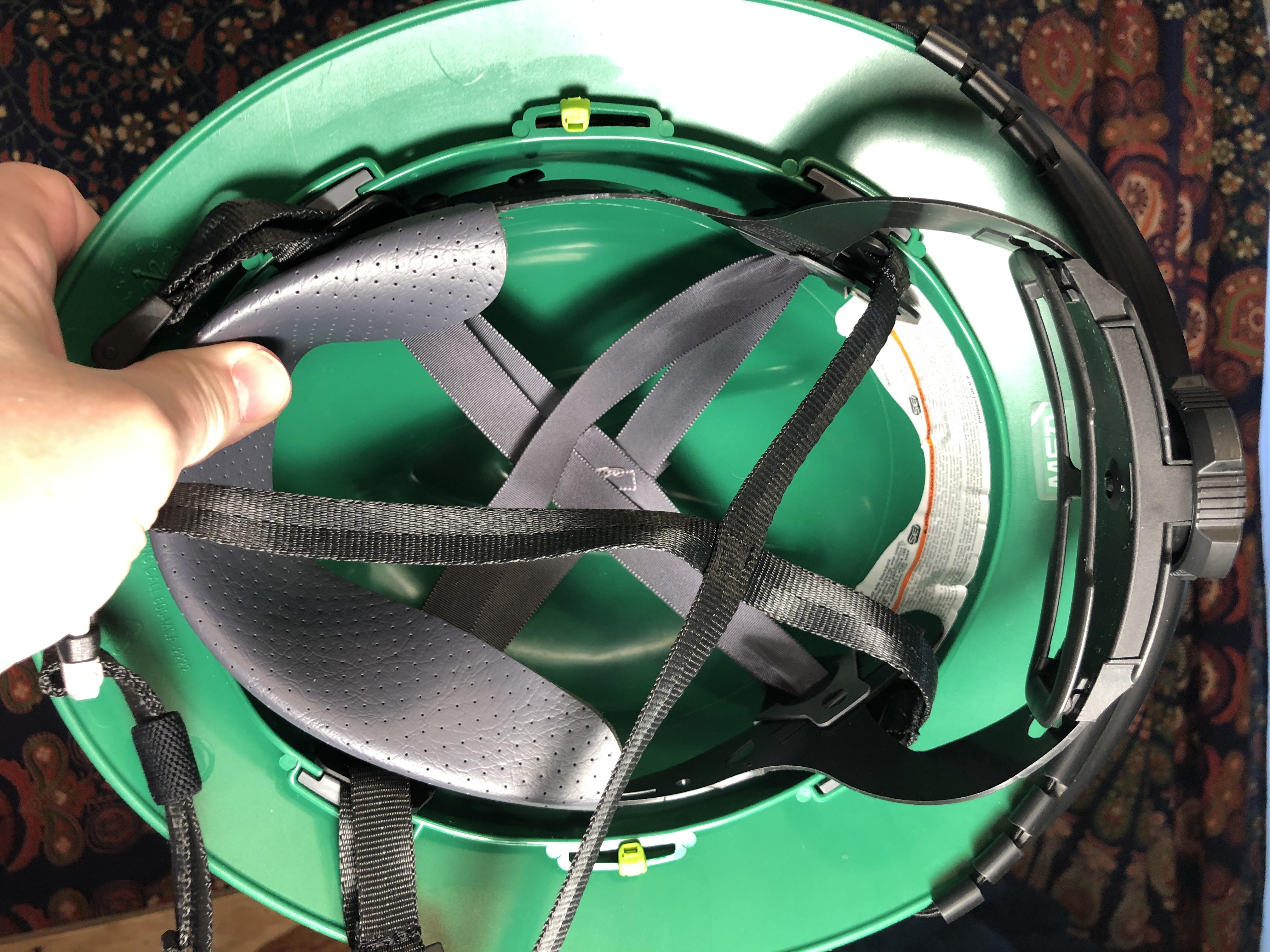
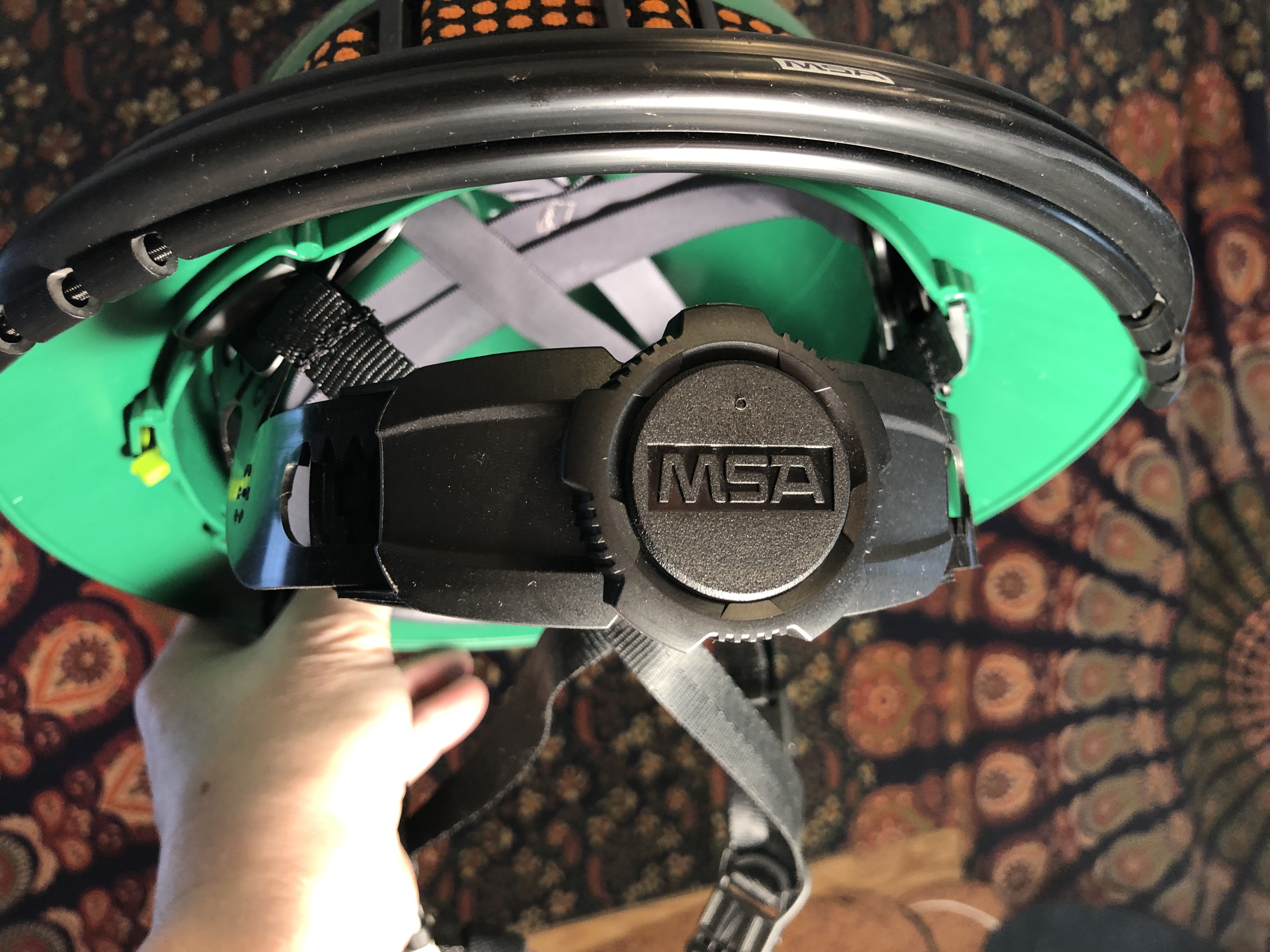
Helmets with a nape strap suspension that is held together with plastic pins is hard to adjust in the field. The plastic pins do not hold up well with frequent adjustments. I’ve had the pins break on me multiple times while trying to adjust them before I began using the ratchet suspension system. This helmet can also accommodate a chinstrap and accessories. Both of them have a downside I’ll cover in the dislikes of the helmet below.
Dislikes
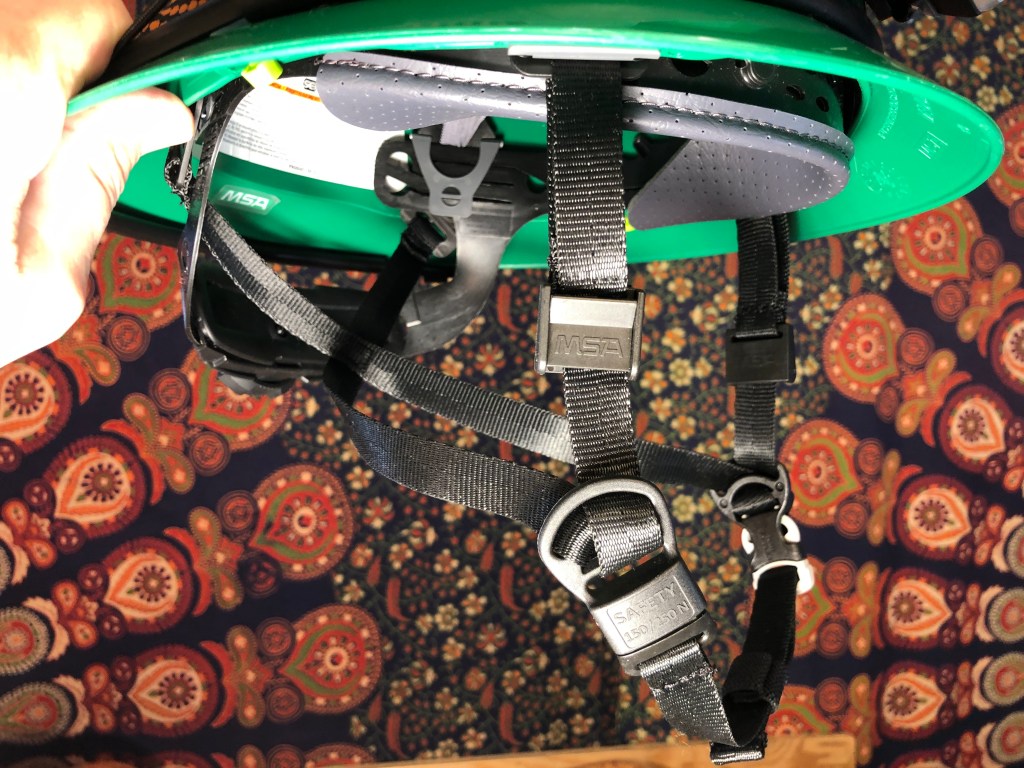
In the last paragraph I mentioned the chinstrap and accessories had a downside. Although this helmet can be fitted with a chinstrap there are only two options. A four point chinstrap made from webbing and a two point made from elastic. In my opinion an elastic chinstrap is worthless. It will not allow the strap to be tightened enough to hold the helmet on during an impact. There is too much give in the material to be effective. However a nylon two point chinstrap is effective but not available. I’ve used them on all of my firefighting helmets and never had the helmet be knocked of my head. The four point nylon chinstrap is effective however I find it annoying when it rubs against my neck and head. I’d like to see the portion of the four point strap that comes into contact with my jaw to be a little wider for comfort.
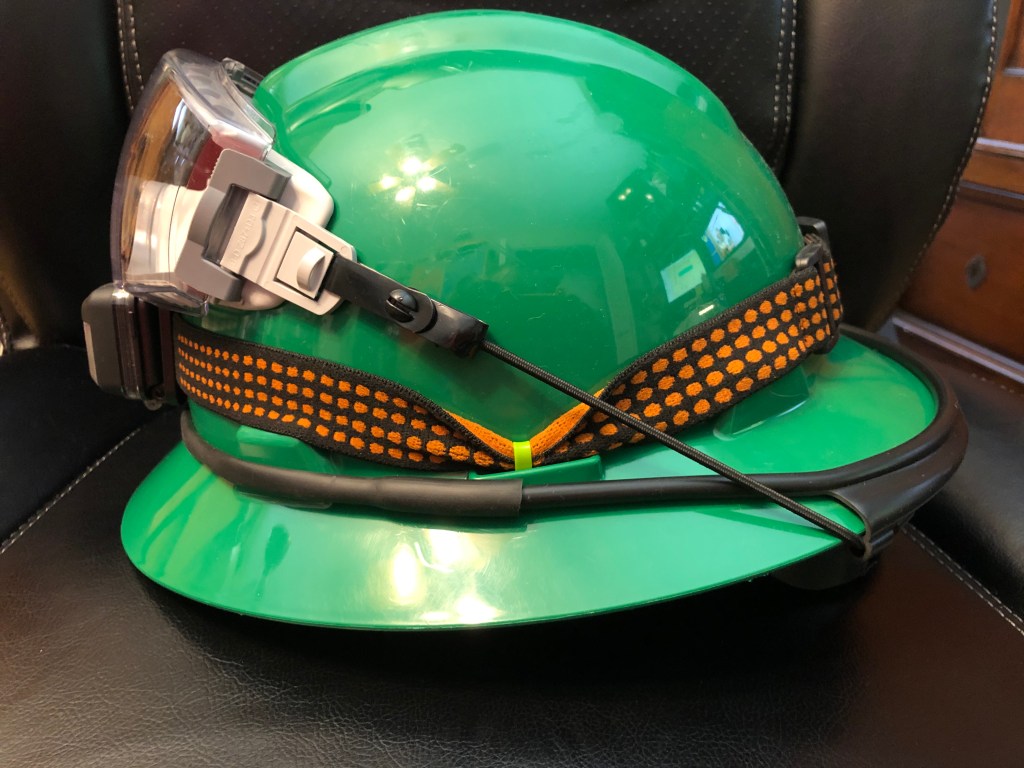
There is a slot on each side of the helmet to accommodate accessories such as hearing protection and a face shied. The downside to this slot slightly defeats the functionality of the full brim when it comes to rain or water shedding. Although this helmet is available without the accessory slots I chose this one to use while working on a Community Emergency Response Team thinking I might use them at some point. What I discovered and had not thought about was how the heavy rain storms we have here in Florida would flow through those slots and drip water down the side of my ears, face and neck. Seems obvious now. Right? One would think I should have caught that little detail with my helmet wearing experience.
As mentioned before this Type I is designed for top impacts. For side impacts a Type II helmet is a necessity. Type II helmets are rated for side impacts. Something essential for animal rescue operations. This helmet does not meet any of the NFPA, OSHA or ANSI standards for rescue operations. Ratings that might be required by federal or state law. Do not assume that because “I’m just a volunteer.” or “…just rescue animals” that you should not strive to meet the highest standards whether required by law or not.

What To Consider
When an individual or group is evaluating which helmet to purchase several things should be considered. Is your area of operations dry like the American Southwest, wet like Oregon or Florida. A full service organization that responds to any animal rescue call for help or dedicated to only large animal incidents for example. Will you be doing in water rescues? Operating in confined spaces such as attics, under house crawl spaces, in city street storm drainage systems, coal mines and caves? On-rope operations, cliffside, in trees, towers, or on the side of buildings and ladders? Those are just a few of the considerations when deciding which helmet to use.
Is This The One?
When I wear a helmet for rescue operations, be it human or animal, on dry land, on-rope at elevation, wherever, I want it to do several things. First, it meets current NFPA 1971 and/or 1951 as well as OSHA and ANSI requirements where applicable. I want the confidence the helmet will help protect my head from hazards I may encounter working an emergency incident. Some of those considerations are electrical conductivity, heat exposure, impact and penetration protection. Before you buy or your organization starts to outfit your team with helmets do some research.
Animal rescue work is no different than human rescue work. It has the same technical requirements for skills and equipment as human rescue. Based on what I view as essential ratings for helmets whether it is an NFPA, OSHA or ANSI standard this helmet does not meet them for rescue work. I would not recommend this helmet for animal rescue depending on what type of rescue operations may be encountered. It might be a low budget helmet to start with but a Type II would be preferred. Please don’t compromise when it comes to personal protective equipment. Do not choose a helmet simply because it is what you see everyone else wearing. Just because you see everyone else wearing a particular helmet doesn’t mean it is the best choice for your needs. My helmet of choice for almost all animal rescue incidents can be found at this blog post Product Review- Phenix Technology’s First Due- Structural Fire Helmet.
If you have questions or comments please post them below or on the YouTube video. Also check out the companion video to this blog post below.
Big Boss- Rescue Chief/Founder
P.S. Please help support our efforts. Subscribe to our YouTube channel. It’s free! Watch, like and share our videos on your social media page. It really makes a difference. You can visit our donations page to find out other ways to support our mission.
 Humane Emergency Animal Rescue