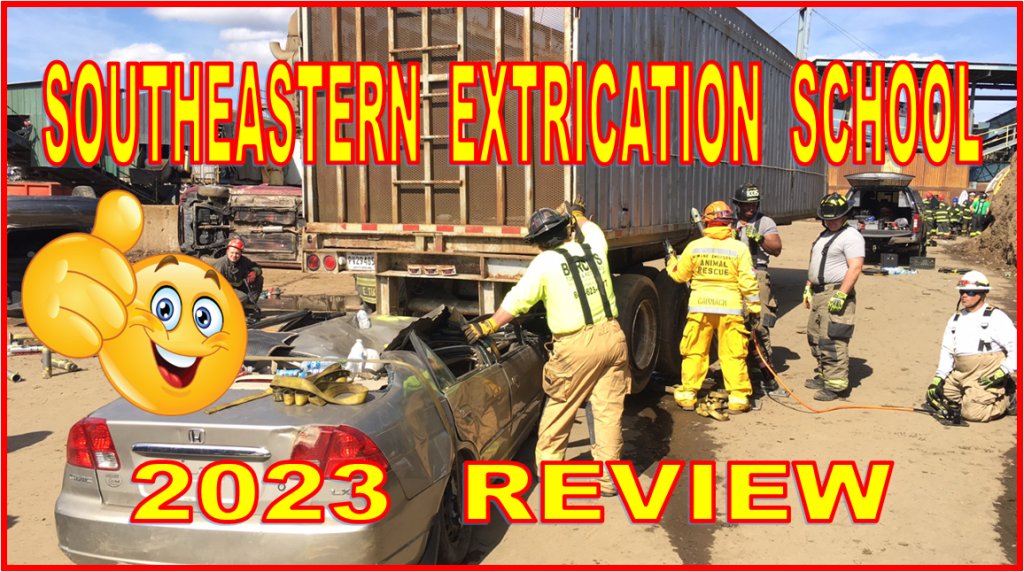
Todays blog is about my experience at the Southeastern Extrication School (SES) in 2023. It’s held once a year in Hartsville South Carolina. If you’re going register early to get the classes you want or miss out. Spaces fill up fast.
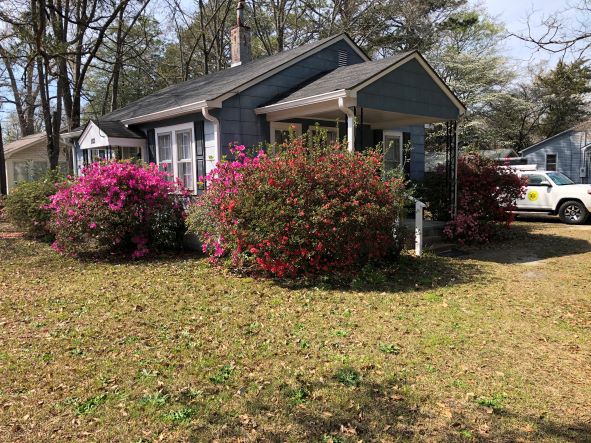
When I checked the hotels for booking I thought they were overpriced for a room to stay in. For the same price as one of the hotels I was able to stay at an Airbnb cottage. I could cook, do laundry or simply relax. It was like going back home each night. Go a day early if you’re traveling far to get familiar with the town. It will make the next few days easier. The food giant grocery store is the only one that had organic options.
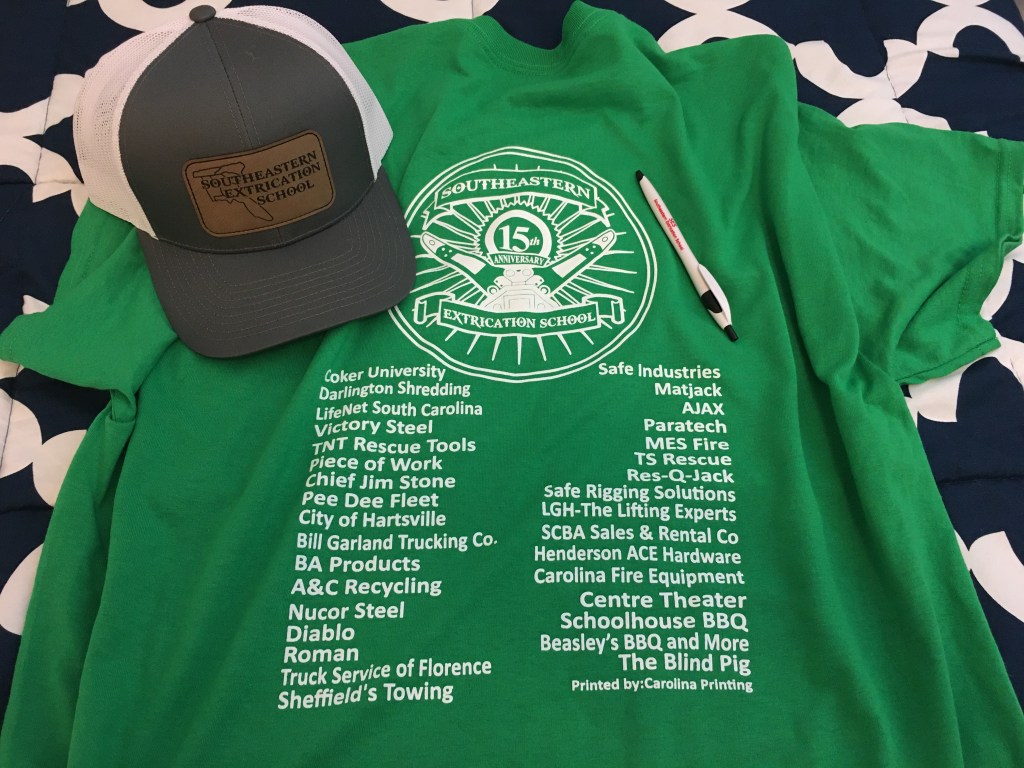
The first day was registration and general assembly at the Coker University Performing Arts Center. When registering we were given SES swag which included a tee shirt, ink pen and truckers hat.
Later in the afternoon during the general assembly a representative from each of the courses available spoke for about 10-15 minutes about their course material.
That ended with everyone meeting at a restaurant called the blind pig. They had several tables set up with boiled shrimp, tacos, barbeque, rolls and more. Iced tea and water to drink or alcohol was available at the bar.
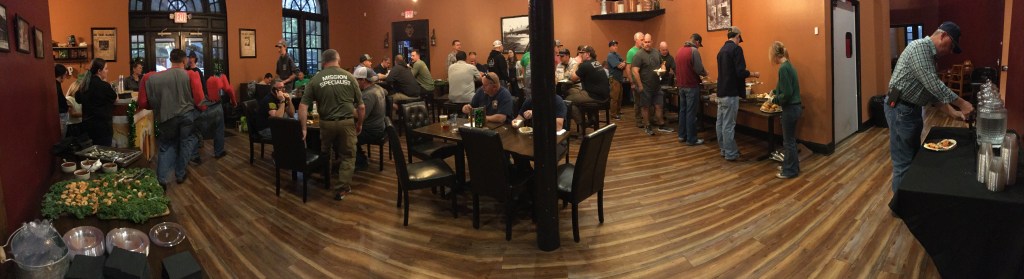
Day two.
There is a designated parking area for attendees. When you park there get there early for the best spots. You’ll also want to bring everything you need with you, such as your PPE, drinks, camera, etcetera in a rugged waterproof backpack or whatever you might carry those things in. There might be standing water and it most certainly will be dirty with oils, mud and plenty of scrap metal.
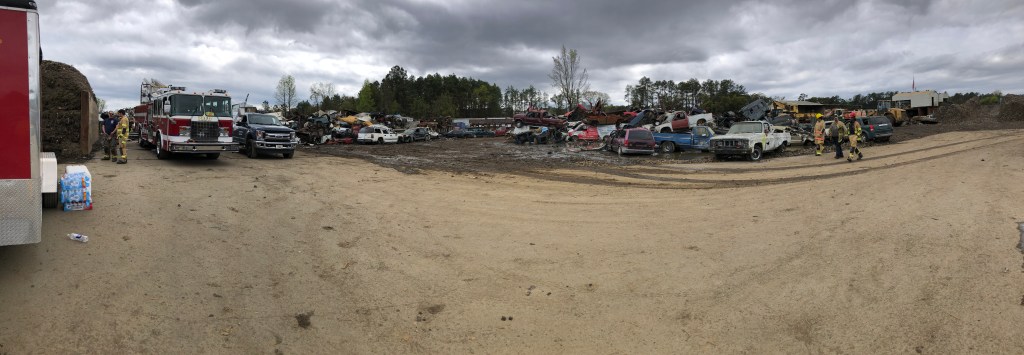
The classes I attended were held at Darlington Shredding. A scrap metal processing yard. It had every kind of vehicle there is. Combines, ambulances, fire engines, heavy equipment of all kinds. Classes are repeated on the second day. Get there early enough to confirm which class you’re attending on the first day. Then you’ll know where to go on the second. We received notification when and where to show up but did not receive confirmation which class on a given day we would be attending. Each lead instructor should have a roster with names of who is attending which day.
Lunches were catered by local restaurants. We were served buffet style in a covered area for students to enjoy the meal. There was plenty of meat, veggies and dessert. Don’t forget your hot sauce if you like it. Or your favorite drink if you’re picky like me.

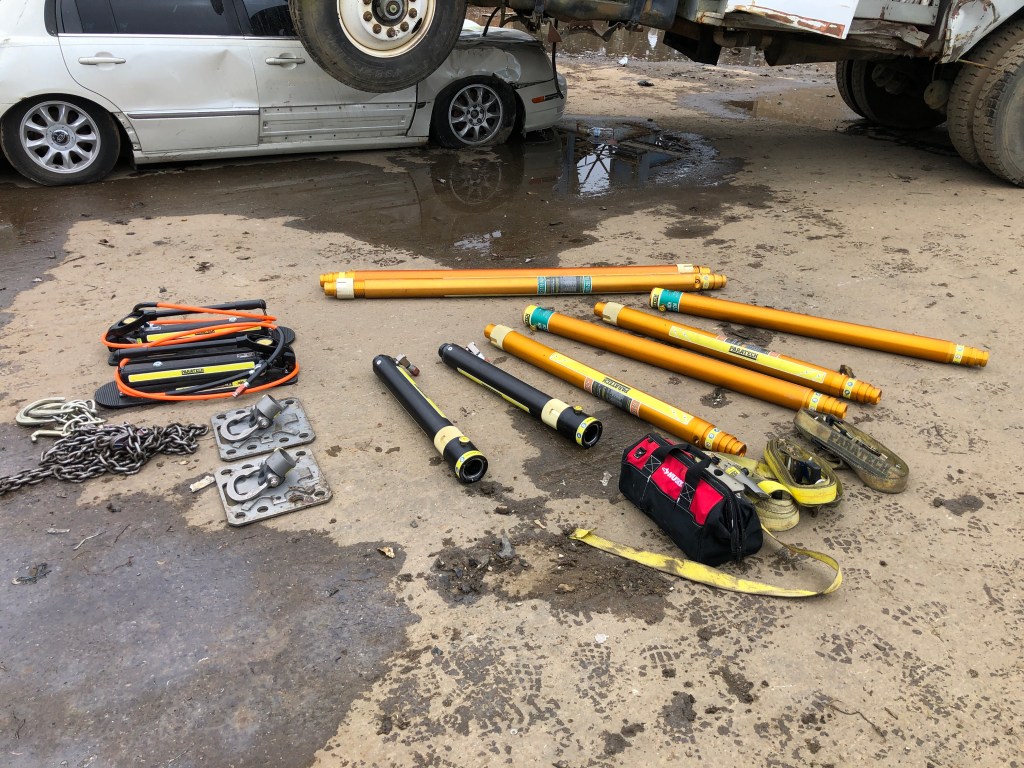
The heavy lifting & extrication class was taught by personnel from Paratech. All the equipment we used was Paratech. Struts, bases, hydraulic pumps, chains, hook cluster sets and straps.
There were several stations set up. Two cars on the roof, two cars on their side, an override, car crushed under a large vehicle, an air bag area with a car, bus and dumpster, then last an underride with a tractor trailer.
The first station was a car on its roof. We learned the basics of the Paratech strut system, the components, limitations and capabilities. Once familiar we performed a few stabilizing evolutions.
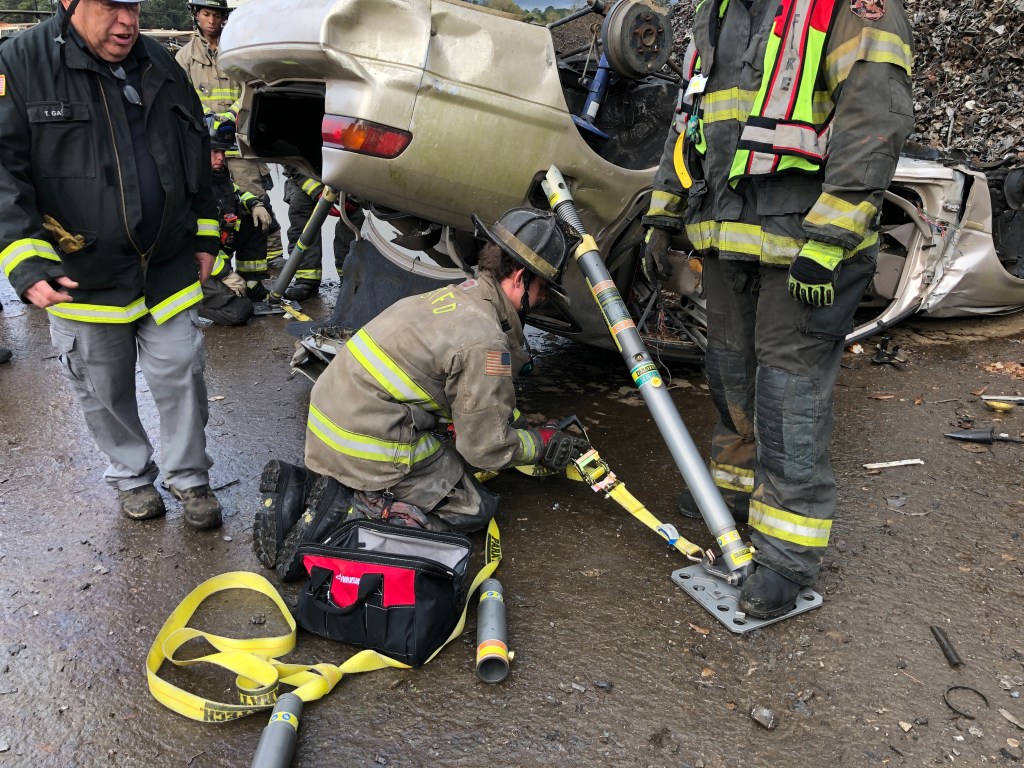
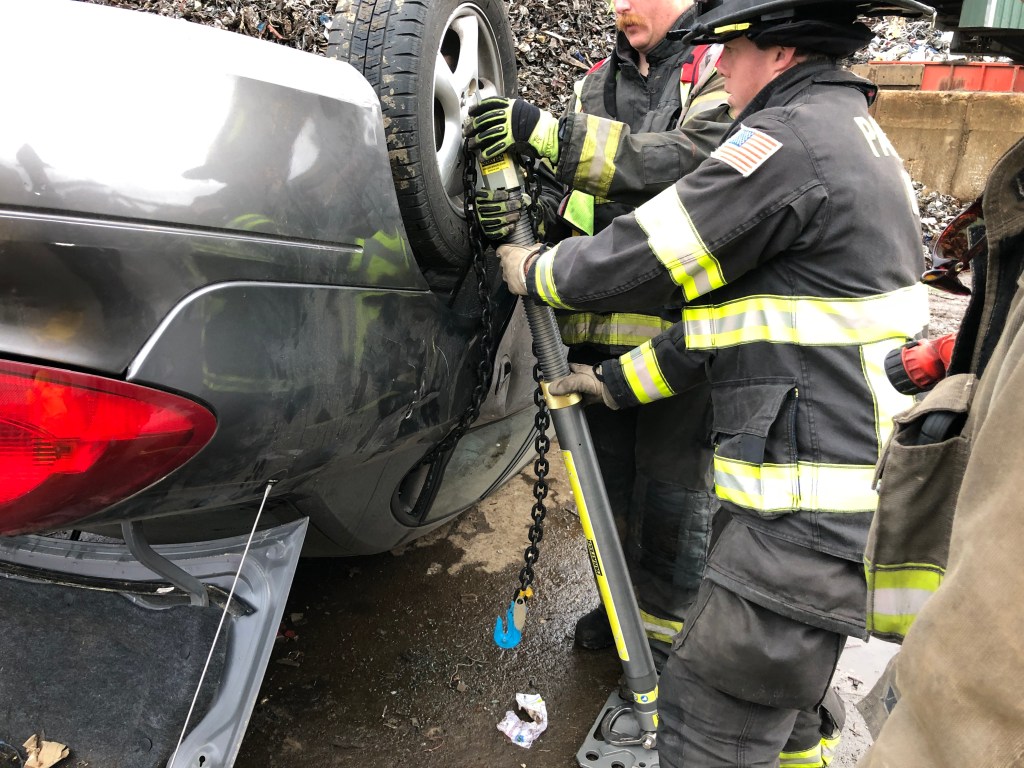


The second station was also a car on it’s roof. This station introduced more components, system capabilities and the new all in one strut, Supporter x2 that combined the strut with the ratchet strap. We used different strut bases, chain and better ways to utilize the equipment. Paratech considers any attachment that goes on the end of a strut no matter what it’s location to be a base.
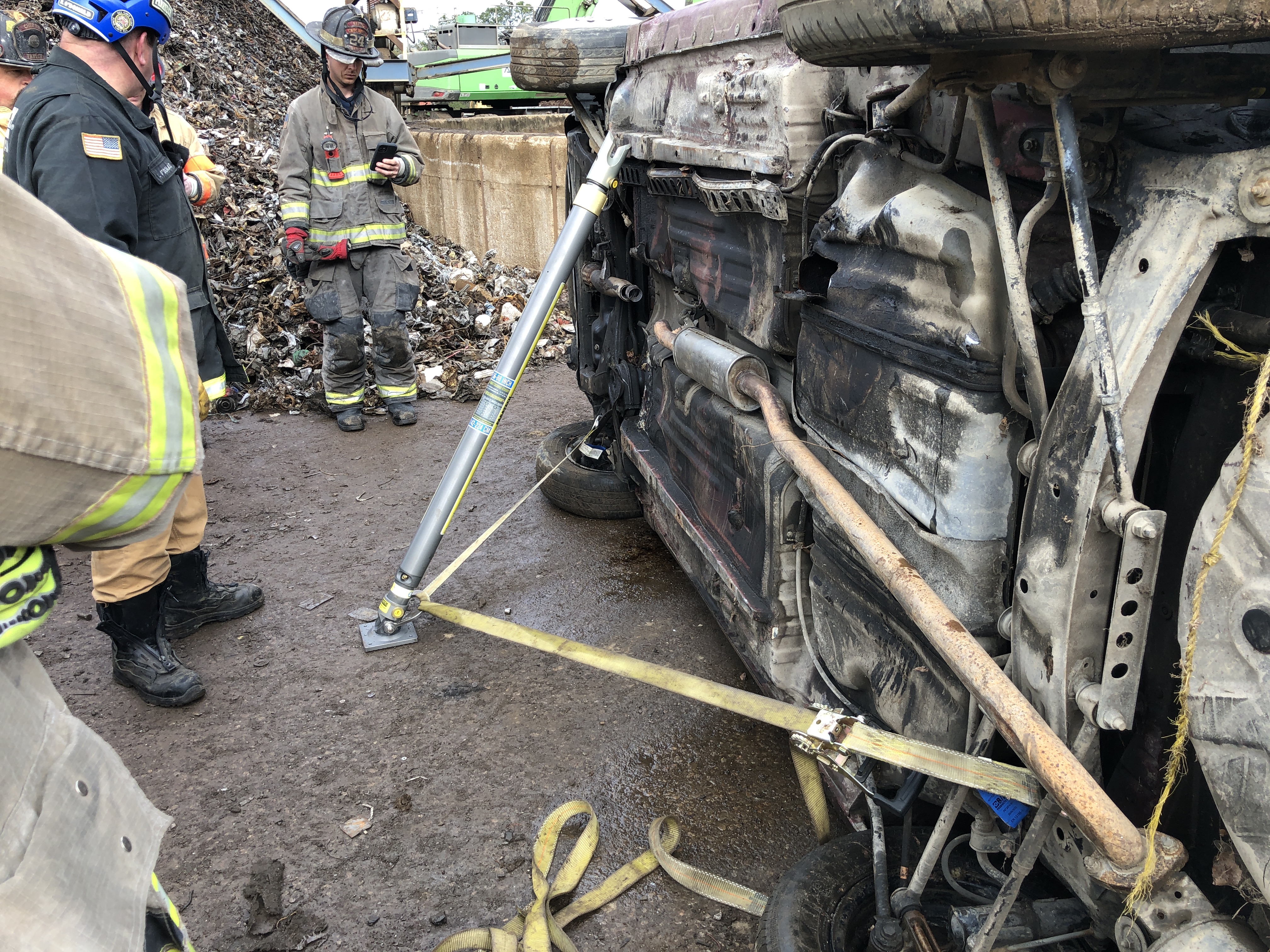
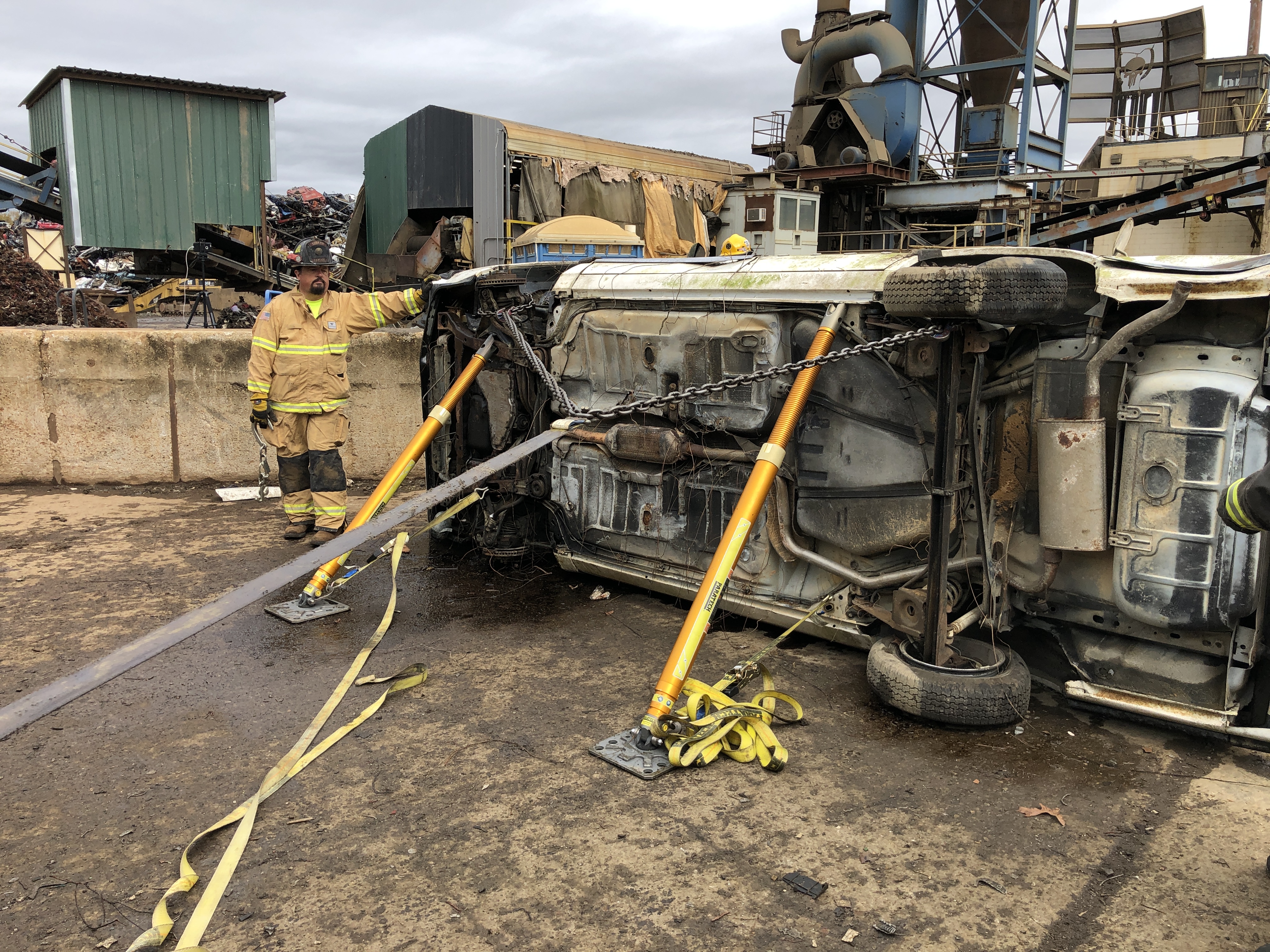
The third station was a car on it’s side with access to the roof and underside. We built on the skills learned from the previous stations how to utilize the struts, chain, strut bases and ratchet straps to stabilize a vehicle on it’s side. The fourth station was a car on it’s side with access to the undercarriage only. We used the same equipment we used in station three to stabilize the car from the underside.
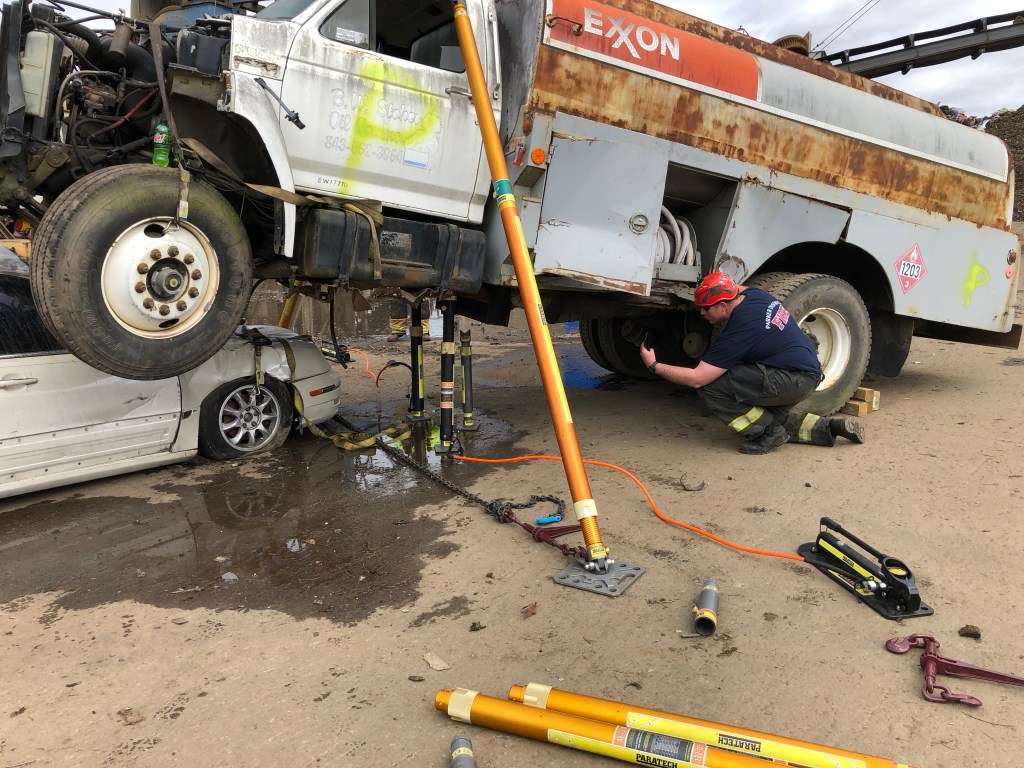
The fifth station was an override involving a tanker over a car. This introduced the hydrafusion strut which is a hydraulically driven strut utilizing the same features as the other Paratech struts. Once the suspension was captured on both vehicles, struts were used to stabilize the tanker, then hydrafusion struts were used to lift the load.
A tip on using the hydrafusion. When connecting the pump make sure there is no pressure on the pump. Check the relief/release position on the dial or it will be difficult or impossible to connect the two. If you’re having trouble double check, it should be easy to make the connection. All of us learned how difficult making the connection was with pressure on the pump.
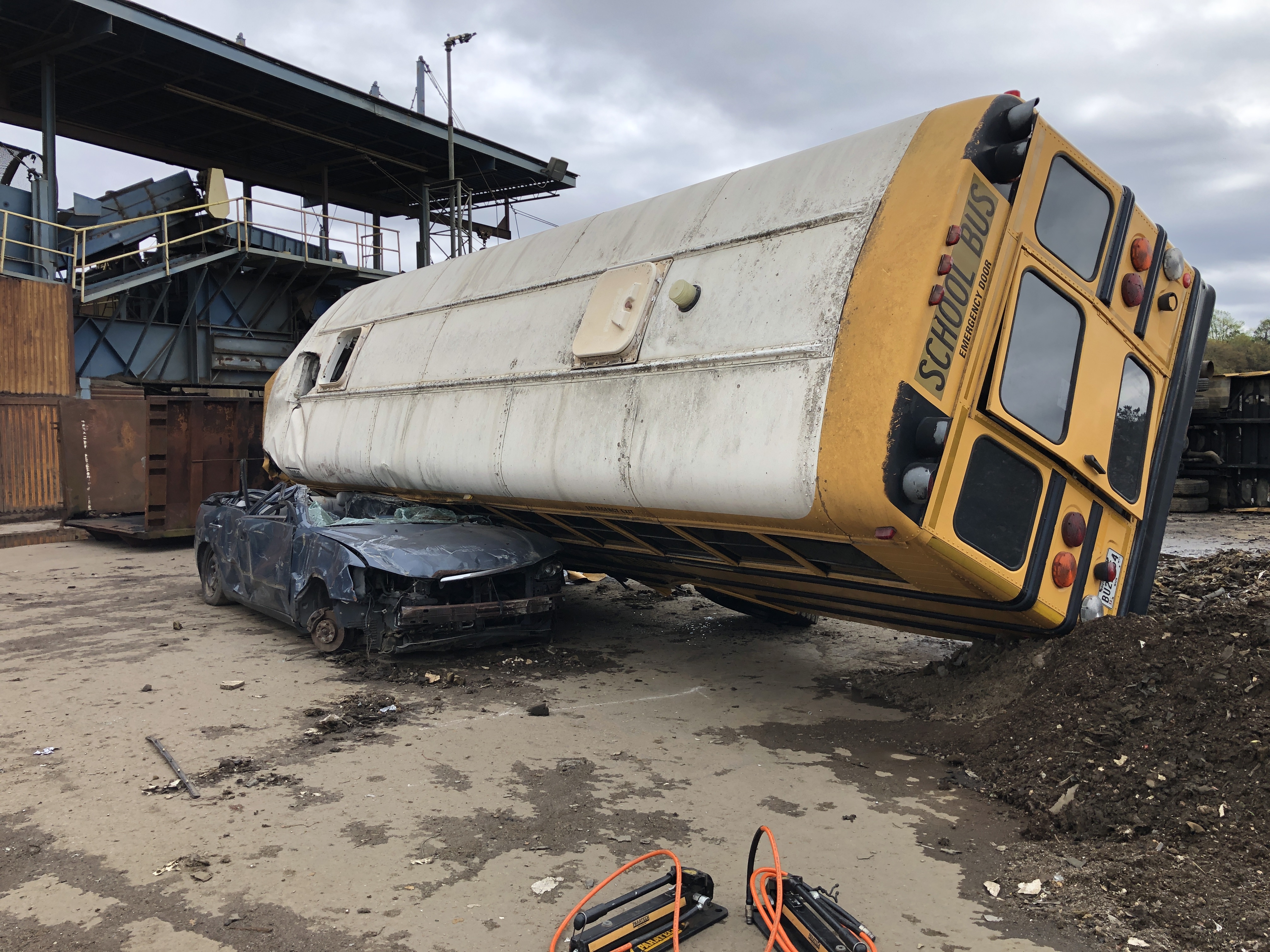
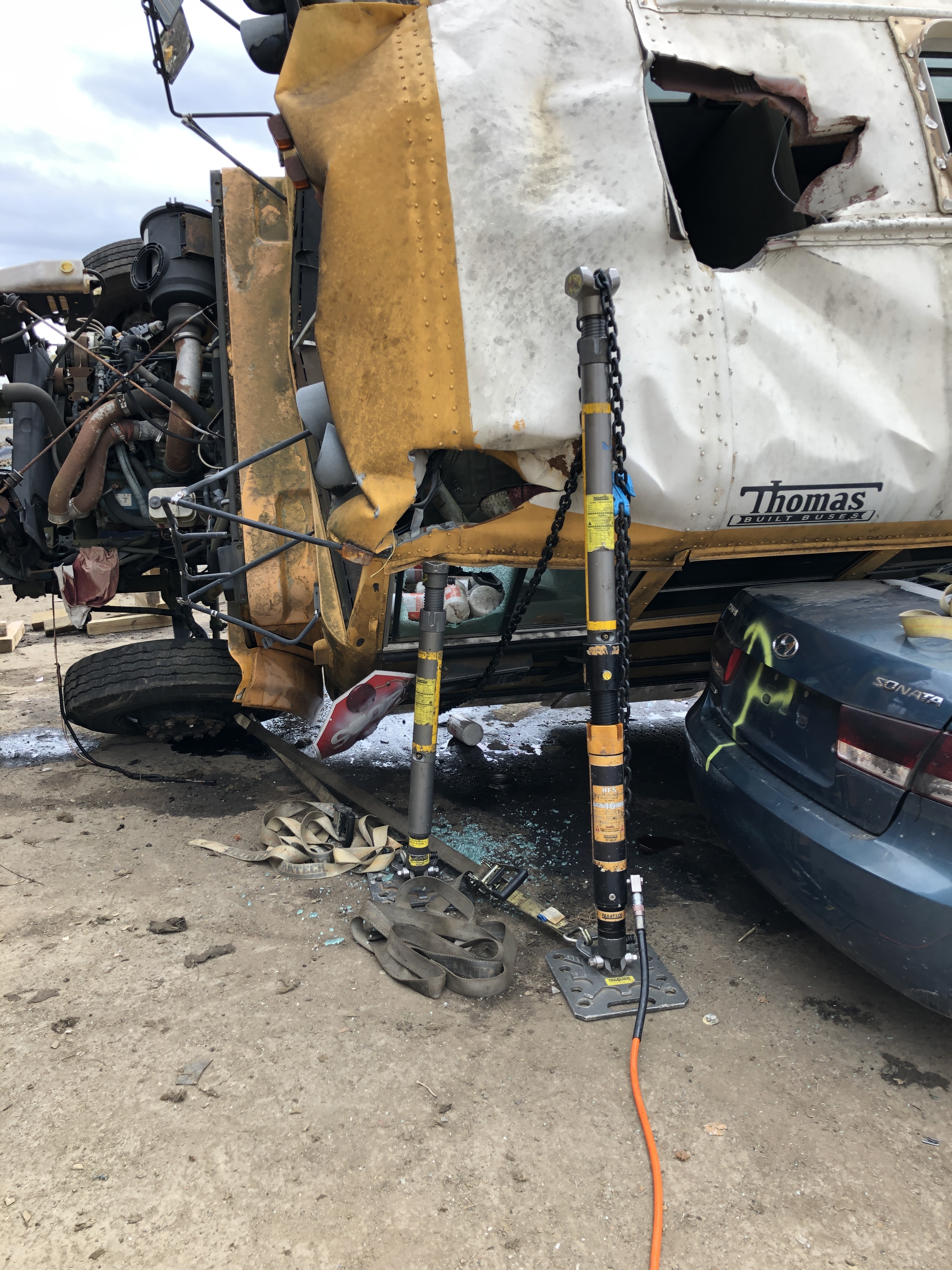
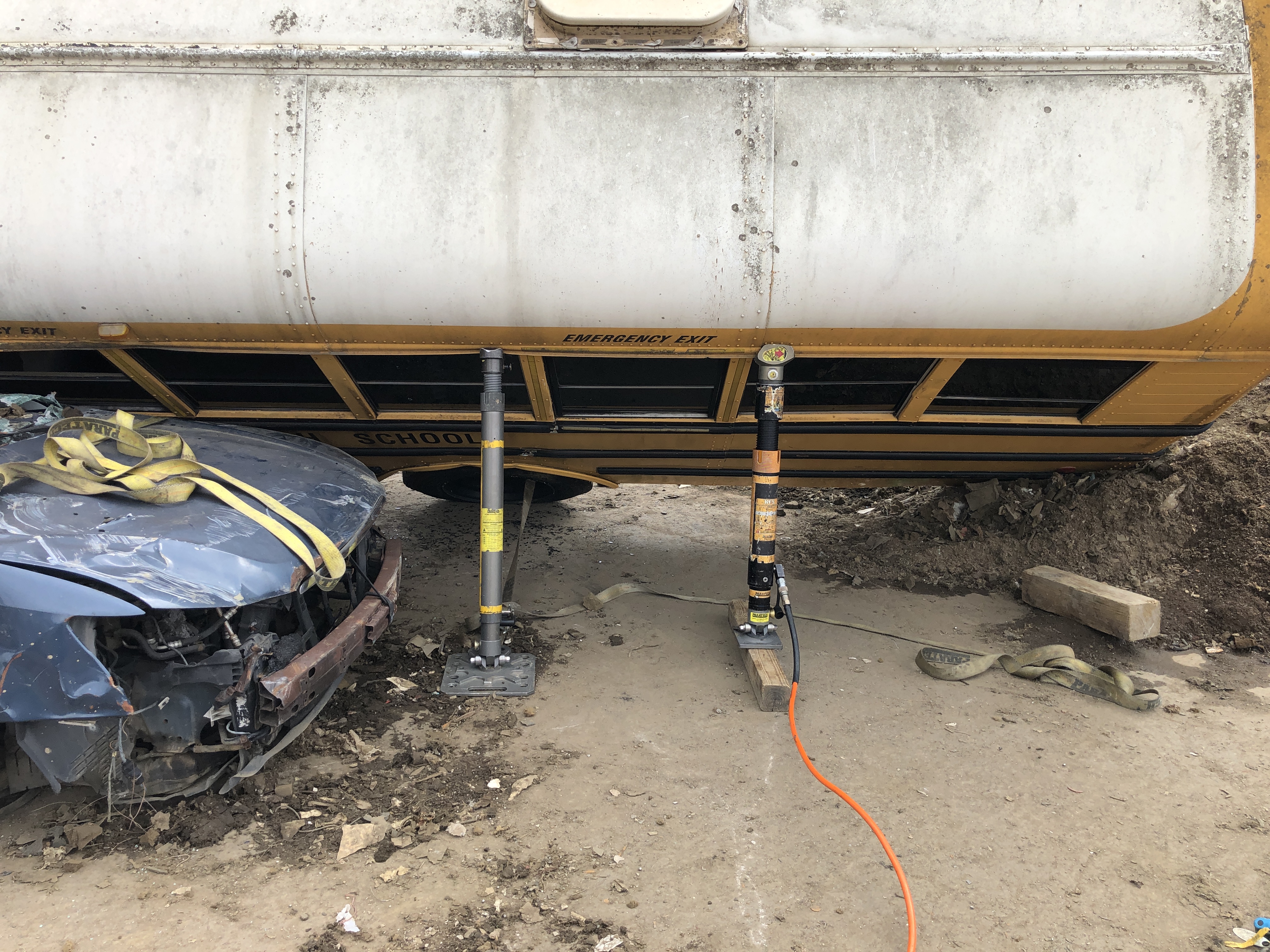
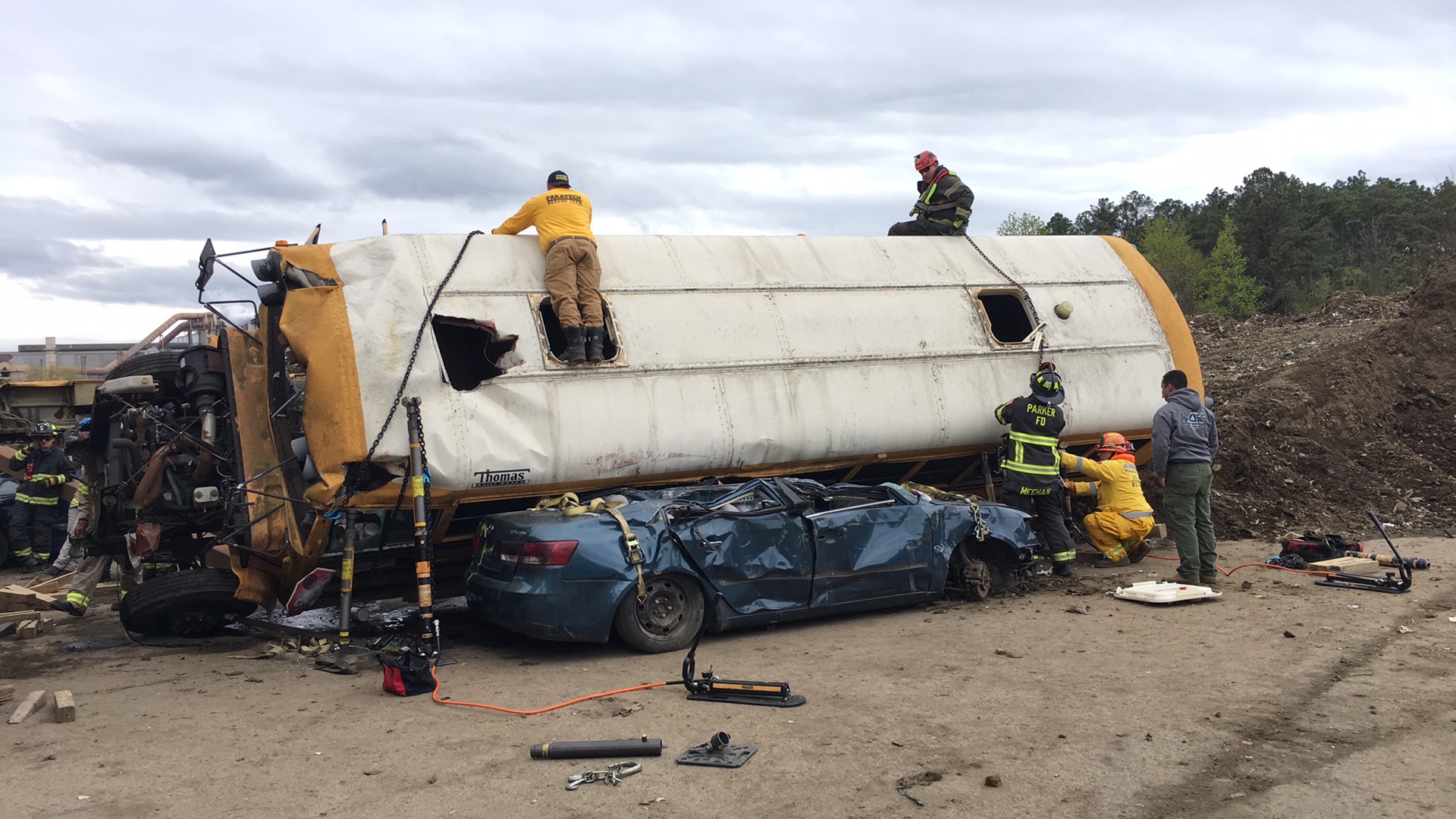
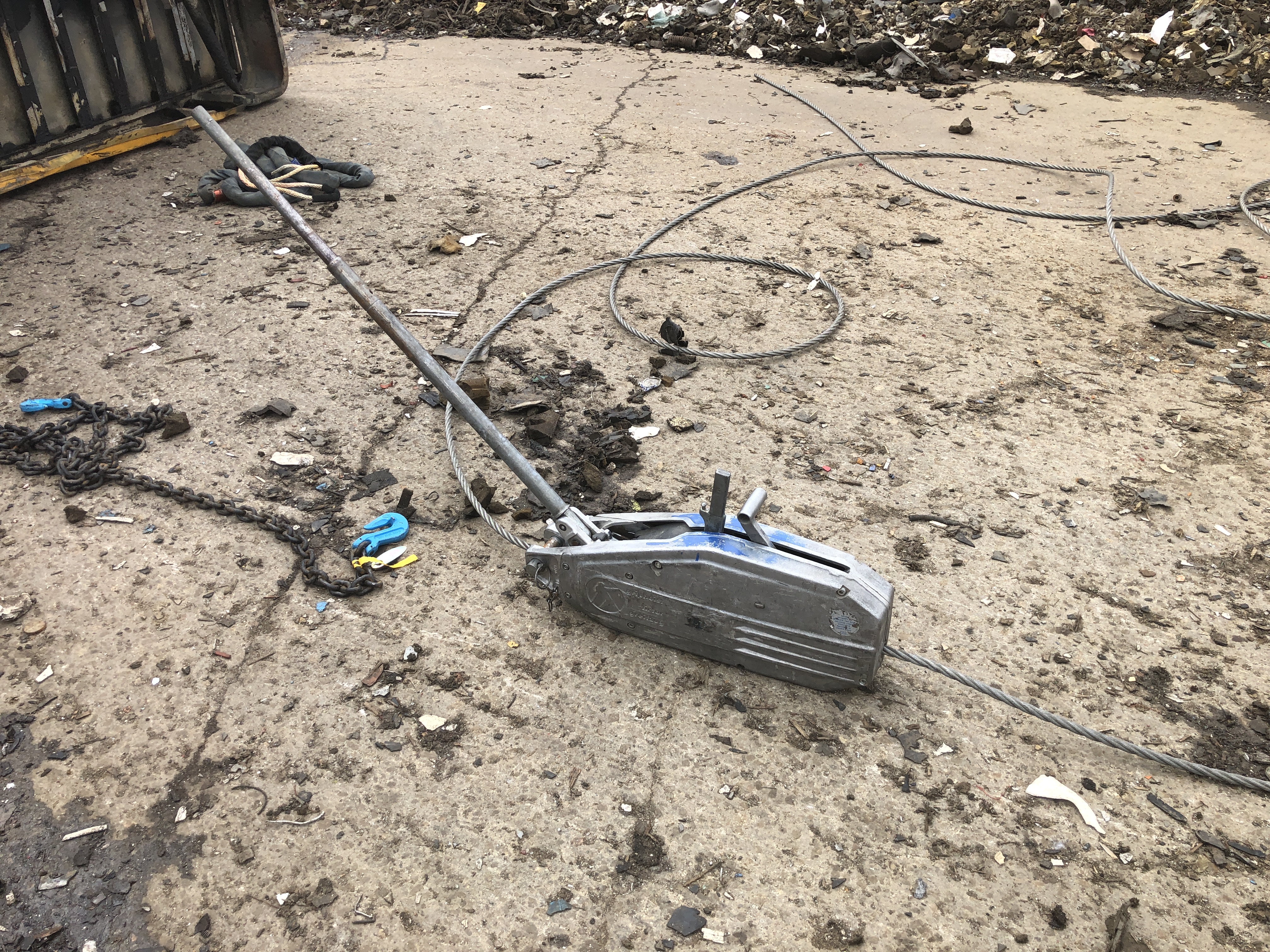
The sixth station was a large vehicle over turned on a car. In this evolution we utilized the hyrdrastrut to lift the school bus and the regular struts to stabilize and capture the load as it moved. We also used a cable hand winch and chain to lift it higher for fun.
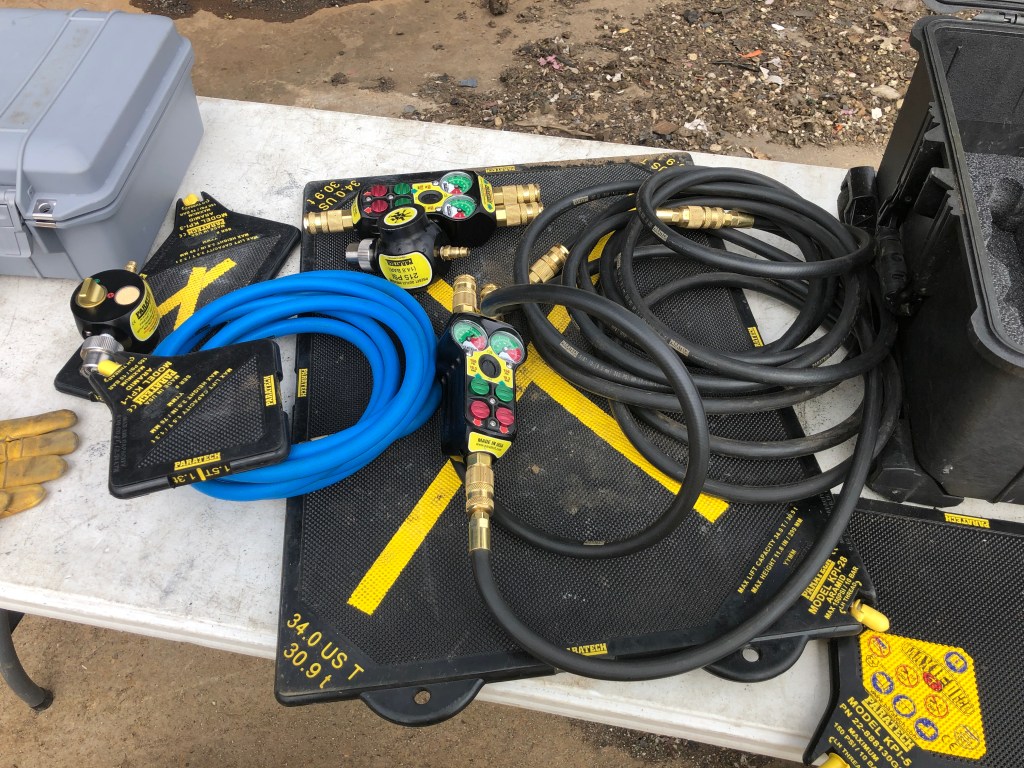


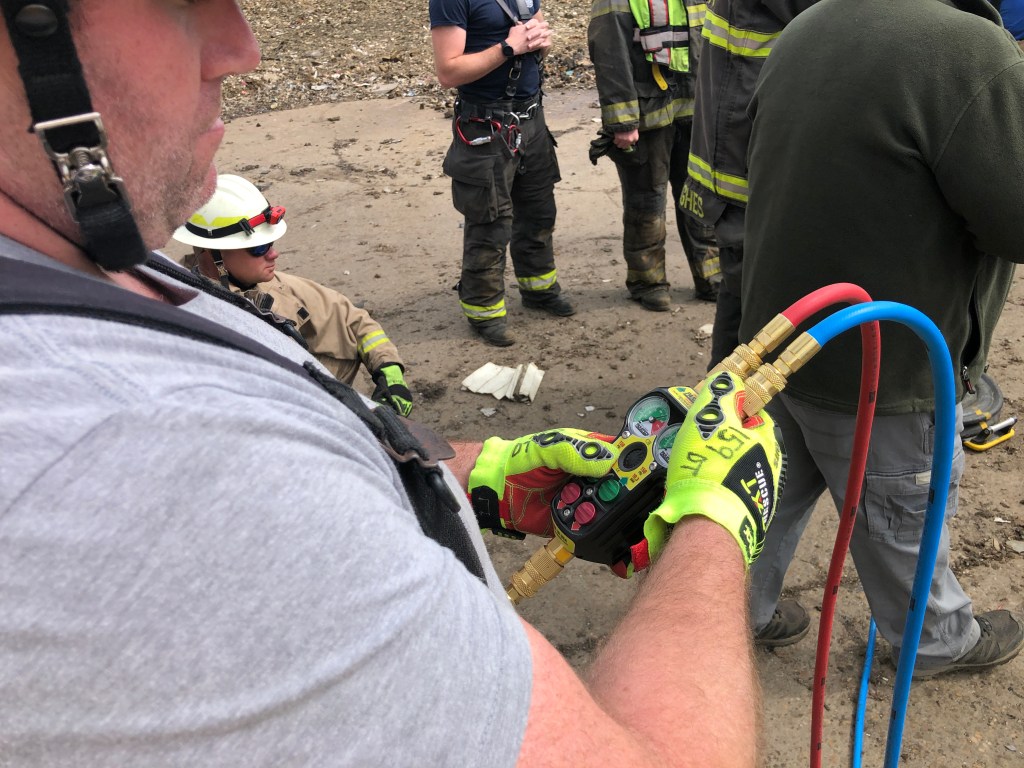
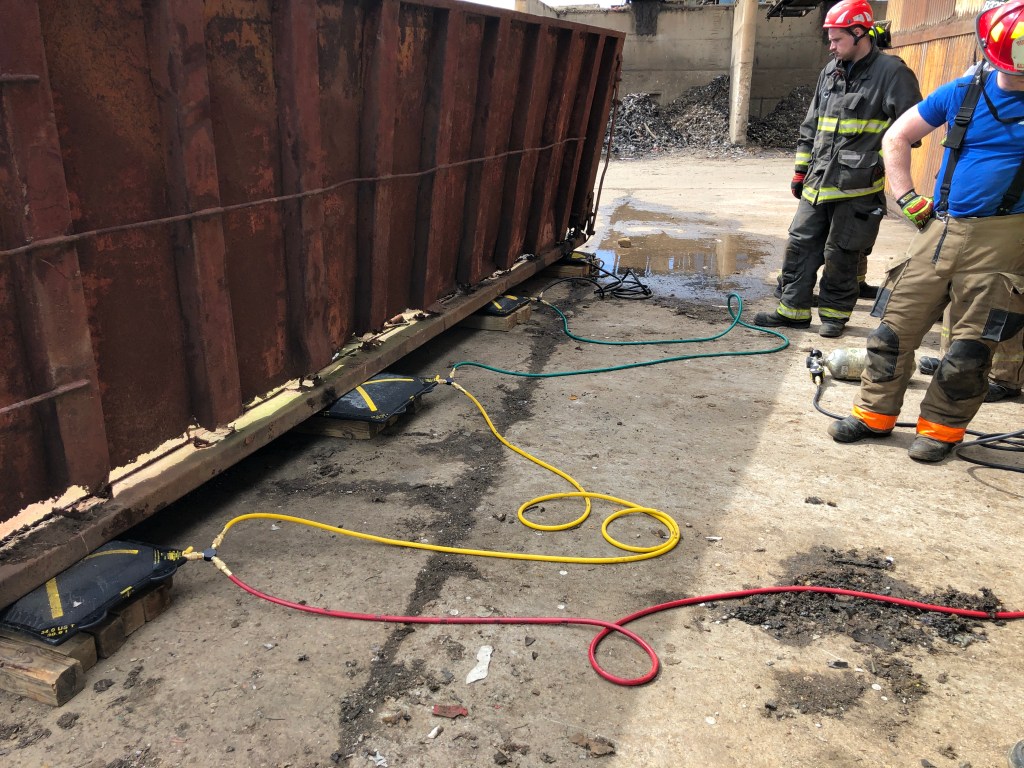
The seventh station was air bags with a bus, car and dumpster. We used all of the air bags and accessories Paratech has. There are many sizes and ways to connect and operate the bags. It’s a nice set up where one individual can control many bags simultaneously. Once we were given an overview of the equipment we practiced on a dumpster then raised the front of a bus with two different air bag types. After lifting the bus we went back to the dumpster and gang lifted multiple bags using a single controller. The dumpster could represent any object within the weight rating of the bags.
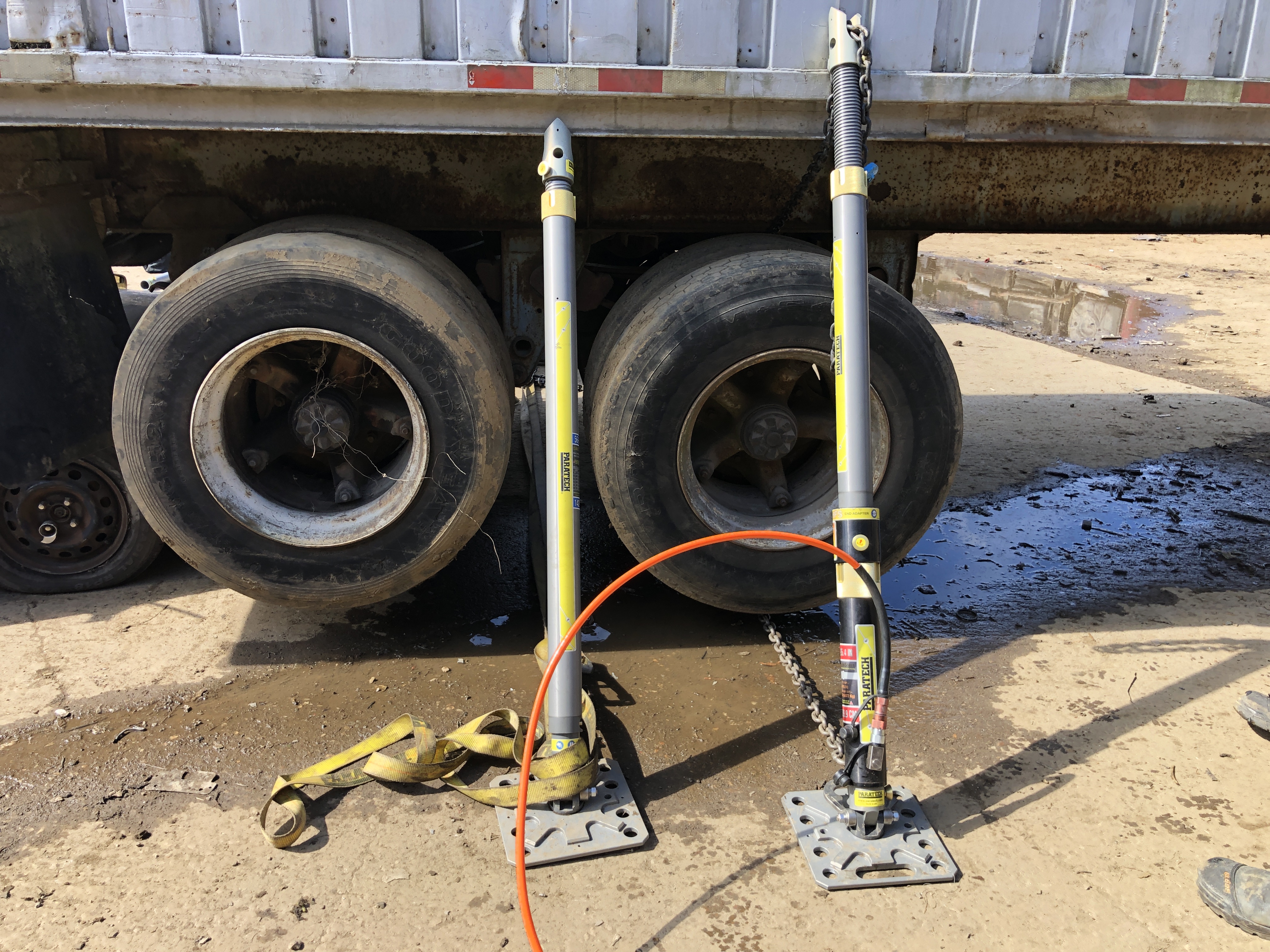
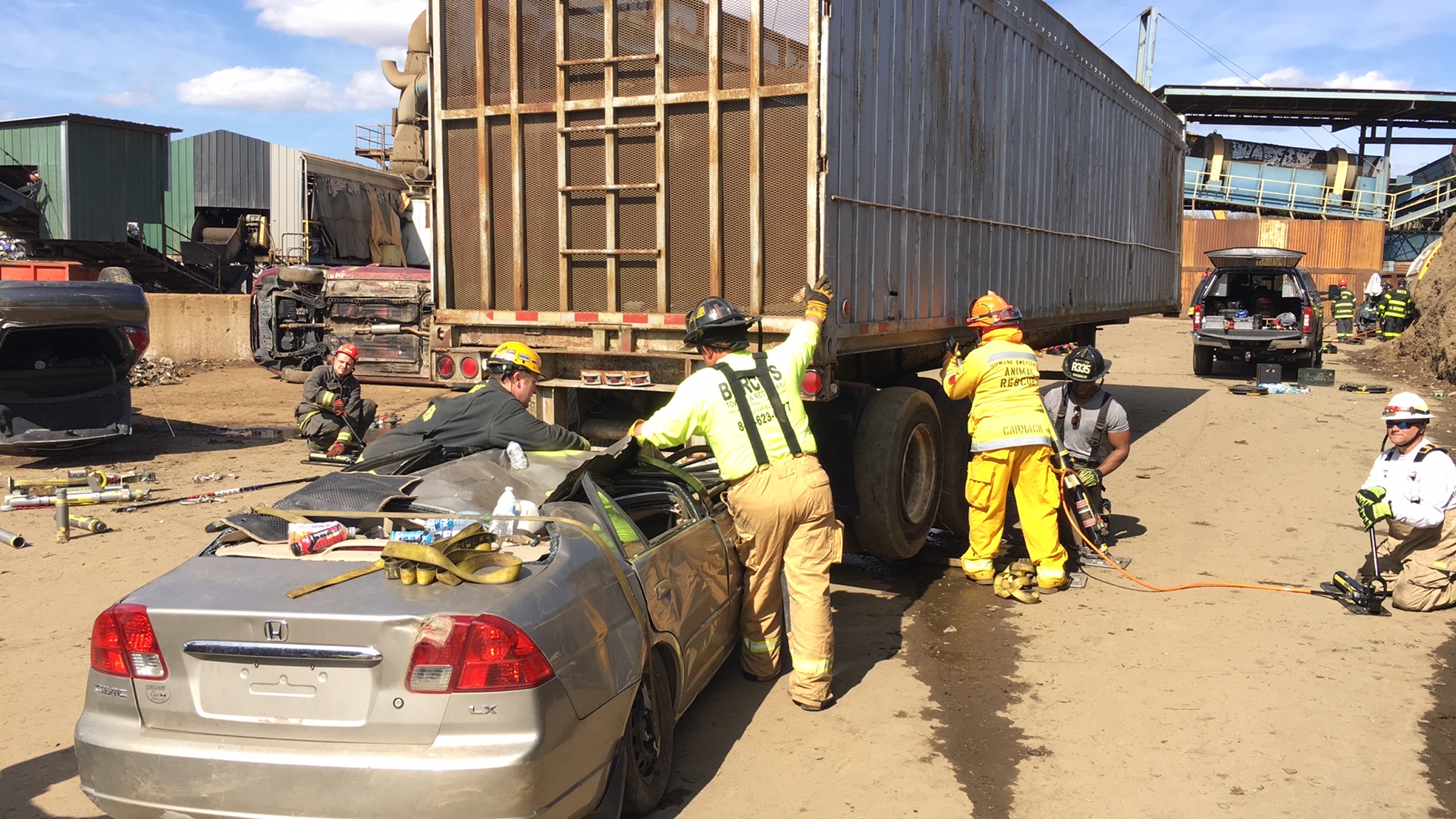
The eighth and last station was a car under the back of a trailer. Once the suspension of the car was captured we placed the struts and hydrafusions in one location, then set up again in a separate location to see how one might be better than another for raising the trailer.

The tractor and machinery extrication was taught by Rescue Techs out of Pennsylvania. There were several stations set up. There was a tractor on its side, a tractor with an override on a truck, fork lift, impalement, skid steer, auger and cutting torch station.
The first evolution was a tractor on its side with a victim under the wheel. Using cribbing and the Amkus tools we extricated the victim in a few minutes. We practiced this evolution twice trying different placement of the cribbing and tools.
Day Three
The tractor and machinery extrication was taught by Rescue Techs out of Pennsylvania. There were several stations set up. There was a tractor on its side, a tractor with an override on a truck, fork lift, impalement, skid steer, auger and cutting torch station.
The first evolution was a tractor on its side with a victim under the wheel. Using cribbing and the Amkus tools we extricated the victim in a few minutes. We practiced this evolution twice trying different placement of the cribbing and tools. The impaled object evolution took less than a minute once we had the object stabilized and the necessary tools. The cutting evolution was fun as you could expect. We used the torch to cut through steel like it was butter.
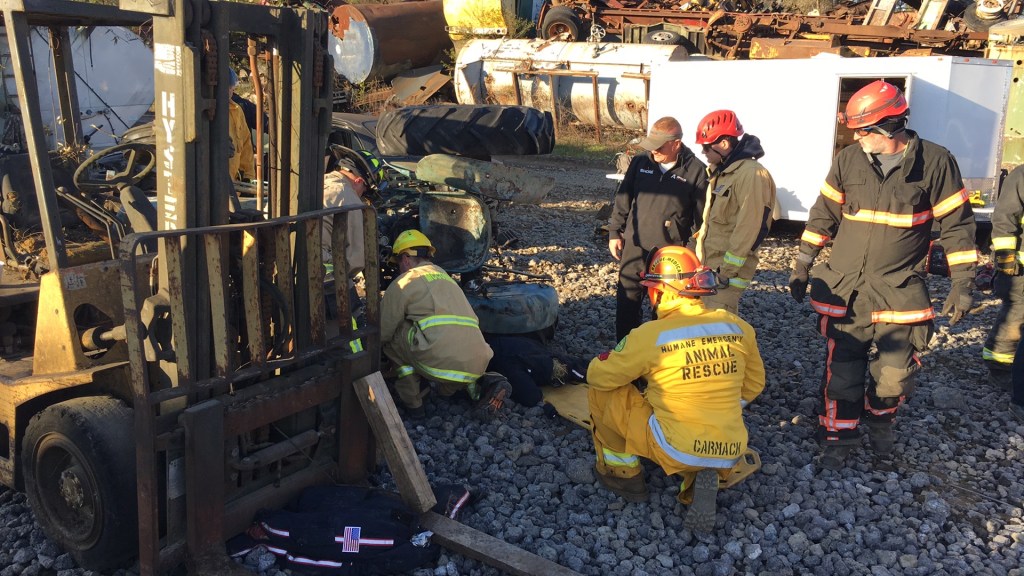
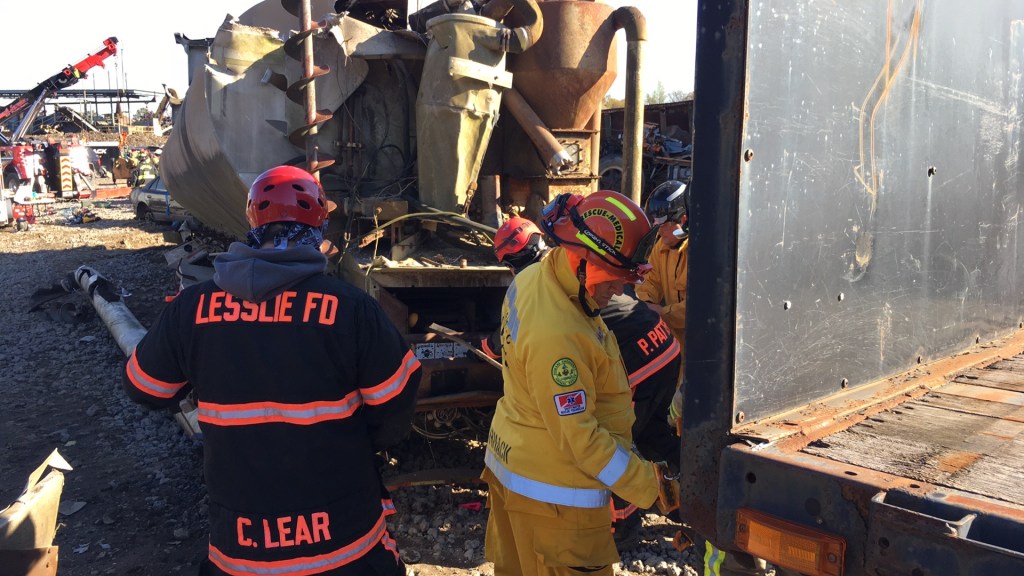

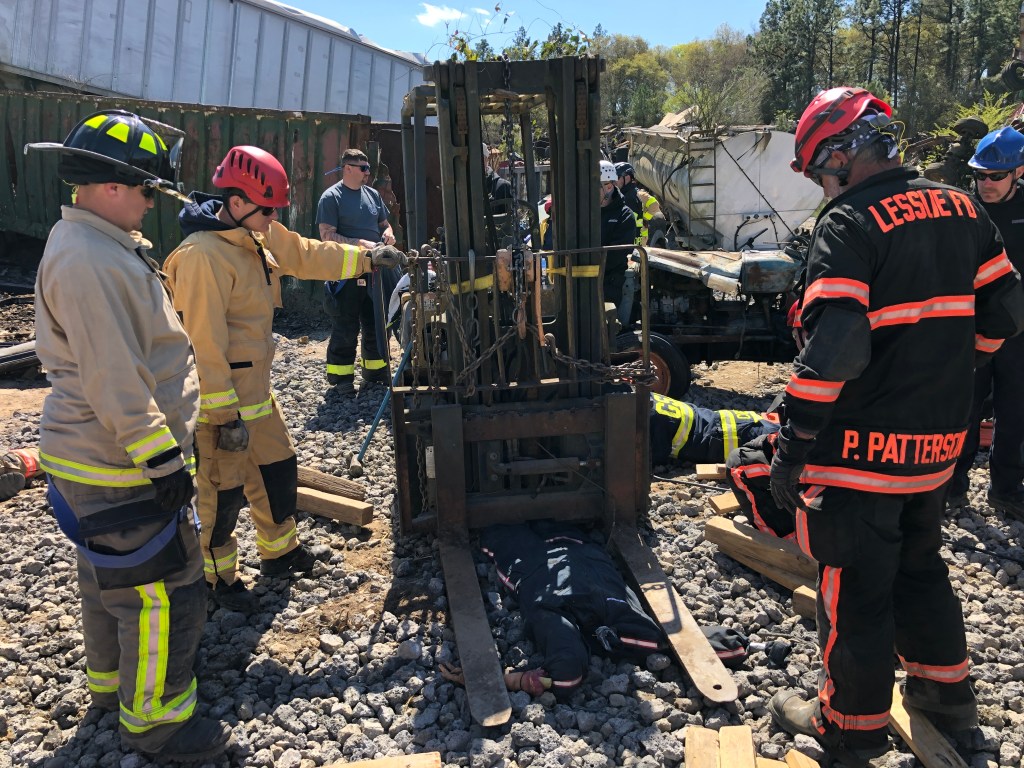
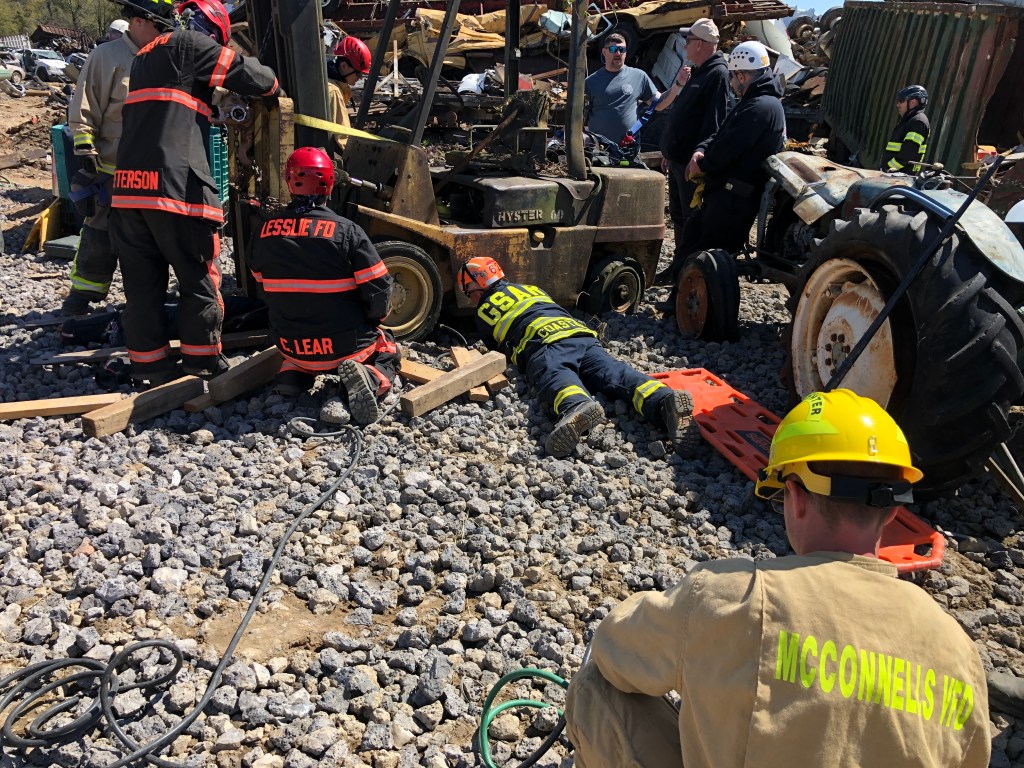
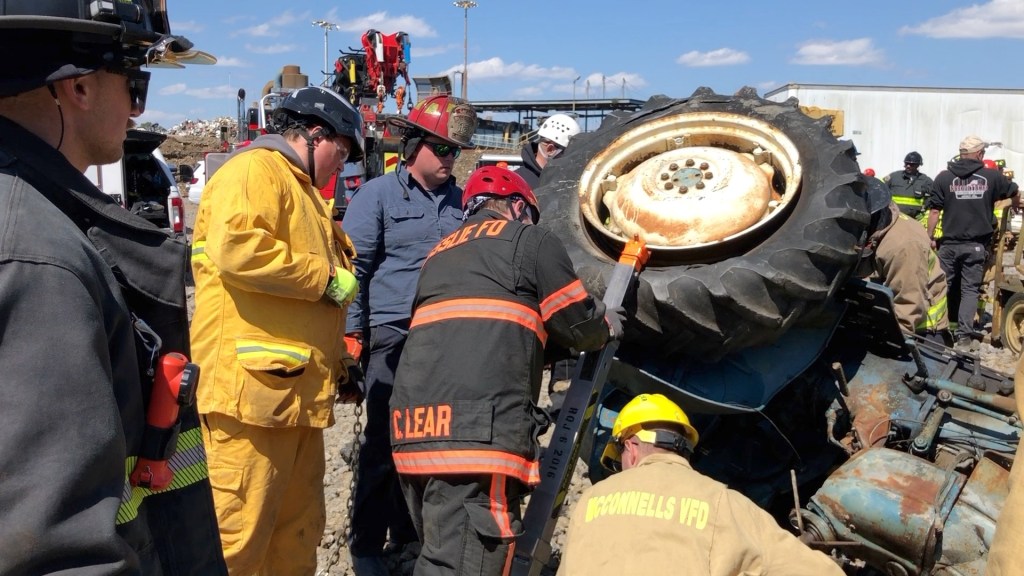
The evolution for the skid steer was nothing more than a discussion since Darlington Shredding didn’t want us to do anything to it. There was a victim under a fork lift scenario. This is one of the situations we wanted air bags for but only one was available. We dug under the lift then utilized cribbing to capture the load then kept building height until we had the victim out. We stabilized and removed a victim from another tractor on it’s side. This one used the borrowed Res-Q-Jack and Amkus spreaders for the lift. Most of these went so quickly I hardly had time to record them. There was also a demonstration of the picket system since we’d most likely be in a field with no anchors.

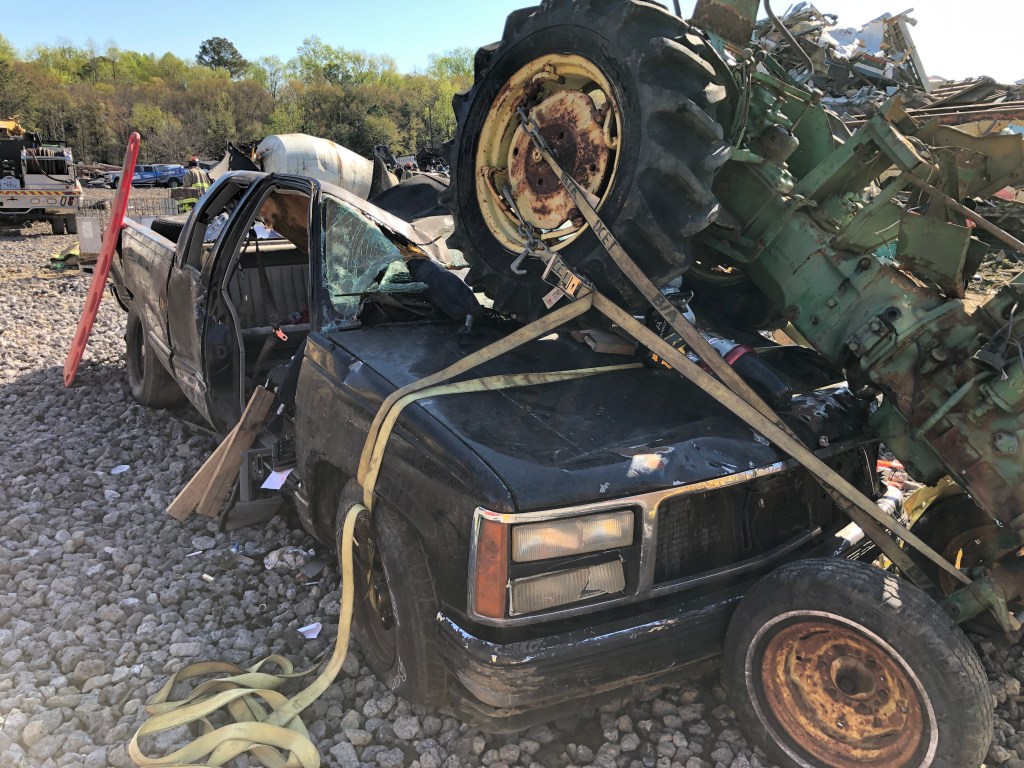

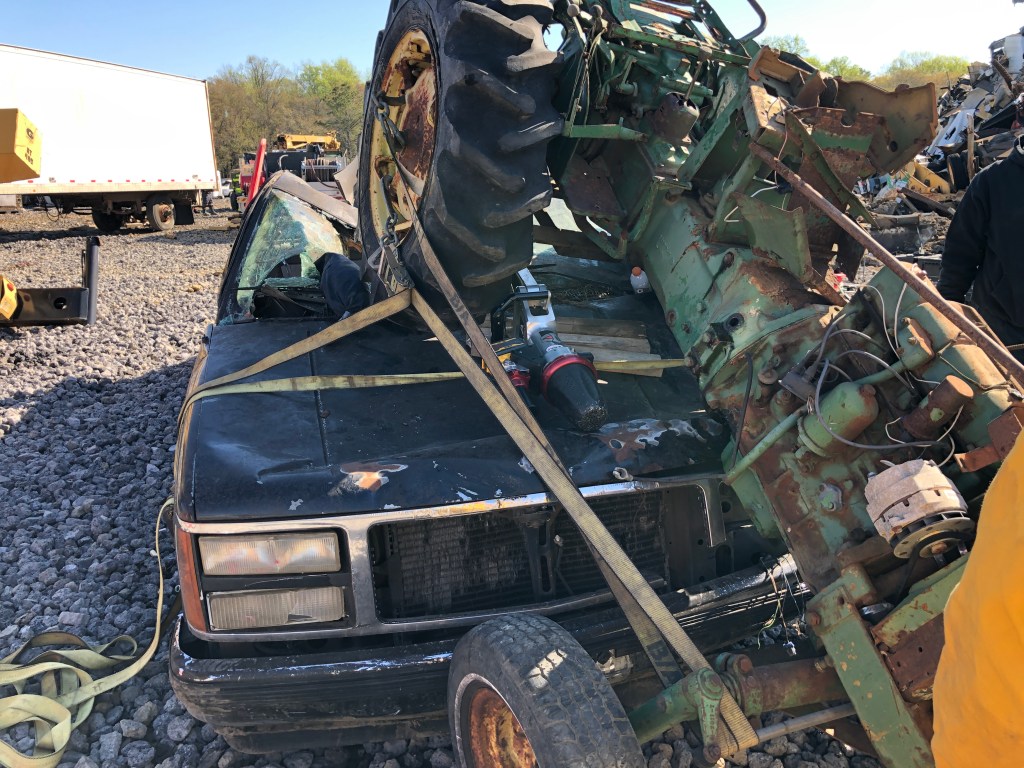
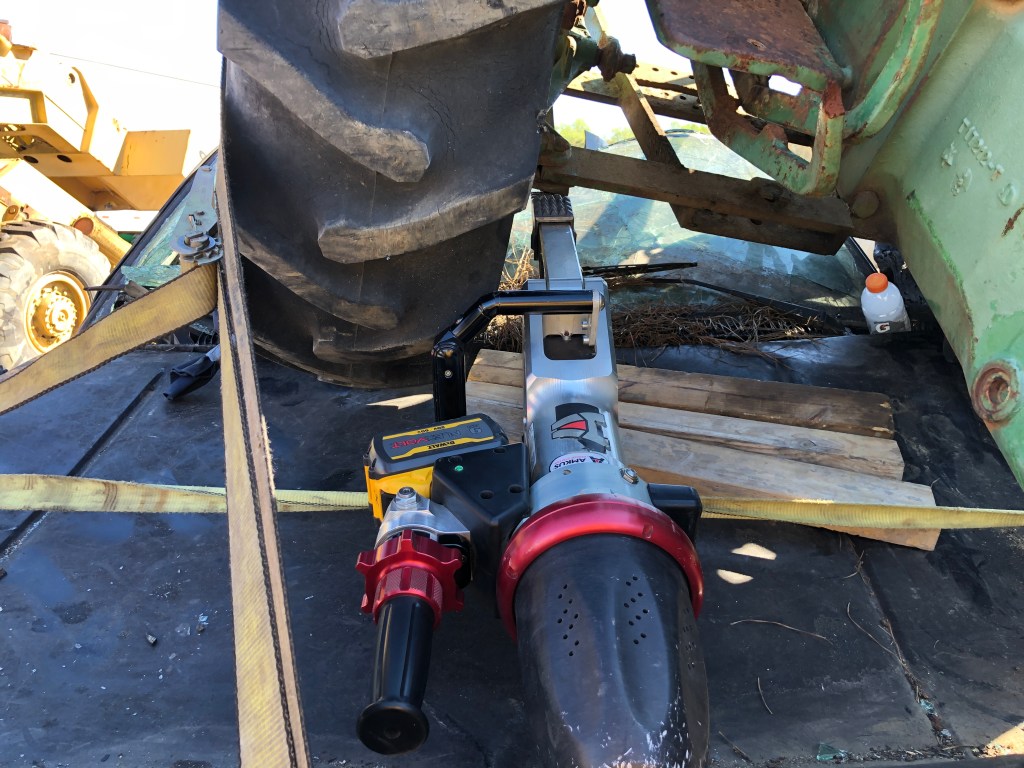
There was a tractor override with the passenger of the truck through the windshield trapped under the wheel of the tractor. Once the suspension was captured on both vehicles and the tractor side stabilized with a Res-Q-Jack the tractor was lifted in seconds with the cordless hydraulic Amkus spreader.
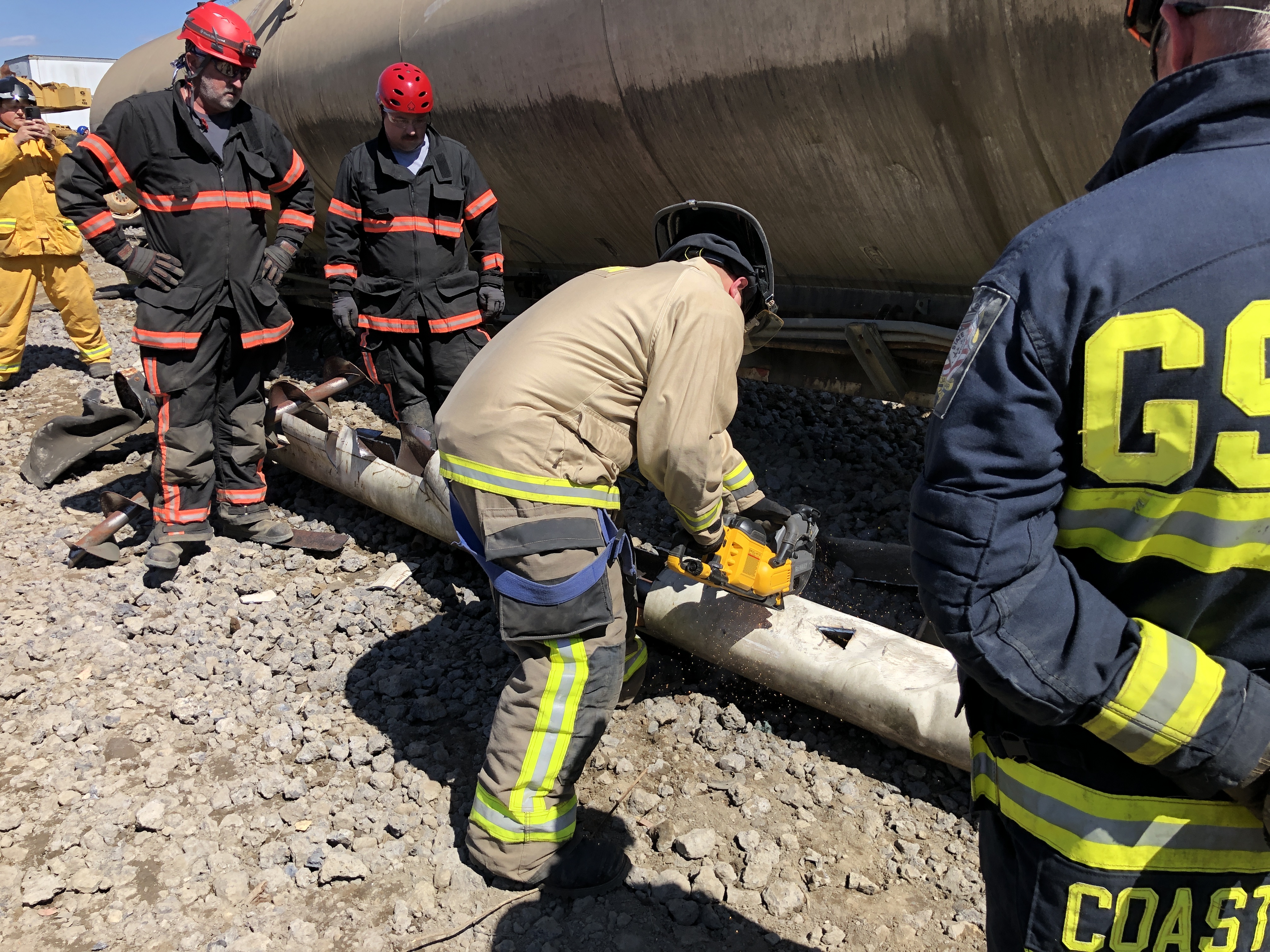
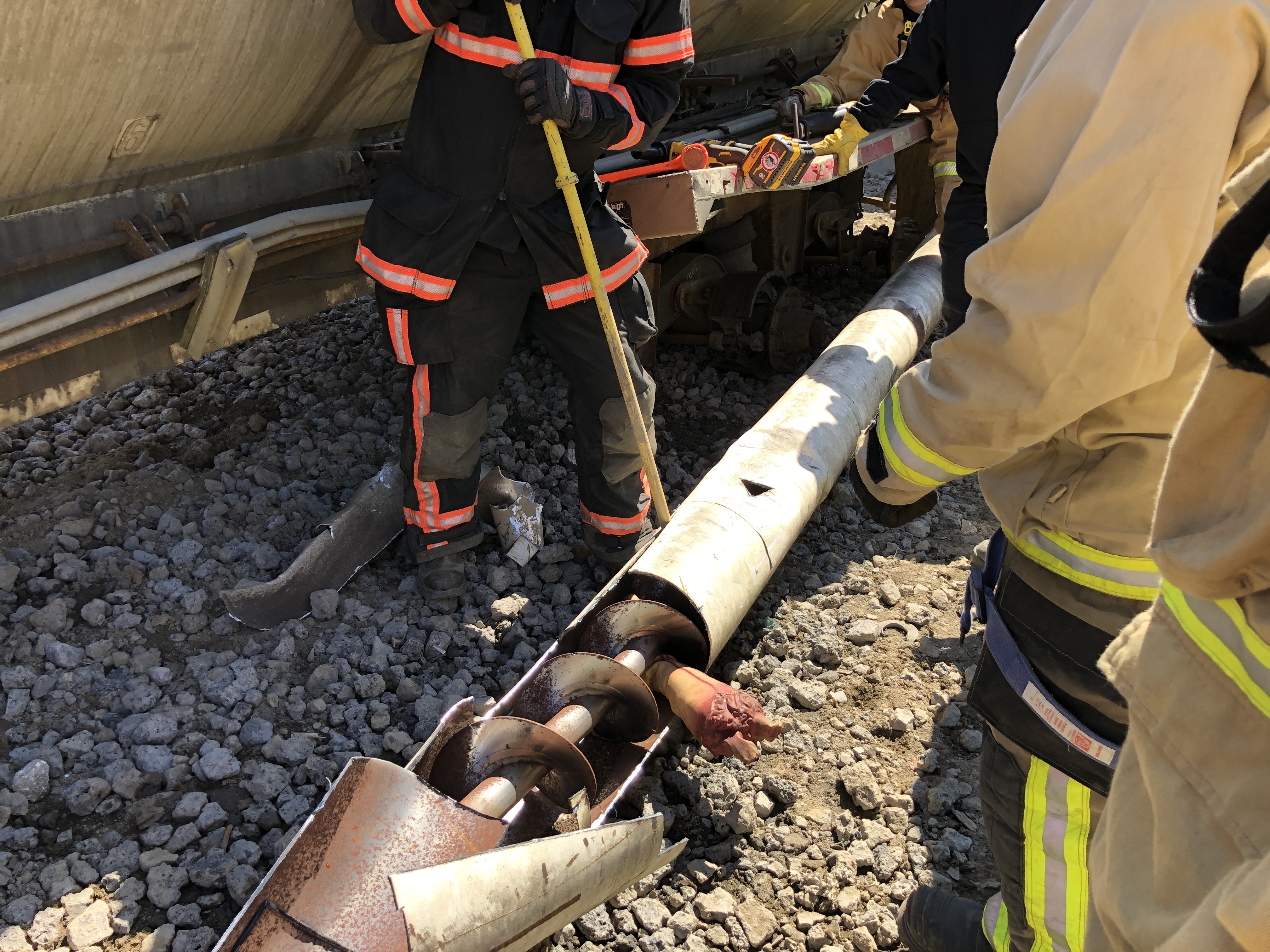
The auger evolution let students try various tools. There were cordless grinders, saws with abrasive blades, reciprocating saws and cordless hydraulic tools. It takes a delicate hand and the right tool to prevent further injury and patient comfort.
The tractor-machinery area had little room to practice our skills. Understanding the need for realism there is also the need to allow students the space needed to focus on building skills then adapting them in the field. It would have been nice if there had been a little more room around each station area. The other issue with the area was the large rocks covering the ground. It was a balancing act throughout the day. Like trying to walk on pool cue balls.
We had access to a full range of Amkus cordless tools and some other tools that might be found on a rescue truck. However we had access to one air bag, the other air bags the company said were in use by another class. This was a disappointment.
I was expecting to utilize the most advanced equipment available so we could get the experience and try different techniques while we had access to vehicles that are hard to access except during a training event. We don’t typically have old tractors lying around here at our base. They also had to borrow a Res-Q-Jack as we were stabilizing a tractor override. We were expected to use the Res-Q-Jack without any training on the device. The tool was handed to us to use. I understand it’s not a complicated piece of equipment however we should have been shown how to use it and informed of its limitations.
On multiple occasions our team found ourselves waiting around before we could move onto the next station. There are a few reasons for this. Our team already had experience with the extrication equipment available which made most of our task move at a rapid pace we’d want to see on an actual incident. I feel that time could have been better spent getting experience with different techniques using other equipment had it been available.
Rescue Tech’s crew certainly seemed experienced and knowledgeable. Looks like not much has changed for farm and machinery extrication since I learned in 1980. Try to disassemble the object so it can be put back into service if possible once the patient is extricated. What has changed is the awesome equipment available that we wouldn’t have dreamed of so long ago.
Overall I had a good experience at SES 2023. I would go again if given the chance. They have a great choice of classes to attend. Check out the video below for more.
Big Boss- Rescue Chief/Founder
P.S. Please help support our efforts. Subscribe to our YouTube channel. It’s free! Watch, like and share our videos on your social media page. It really makes a difference. You can visit our donations page to find out other ways to support our mission.
 Humane Emergency Animal Rescue